Is Raskolnikov's “Extraordinary Man” Theory the Same as Nietzsche's Übermensch?
Nietzsche wrote that Dostoevsky was the only psychologist he had anything to learn from. He wrote it in the same section where he reaches for Napoleon.


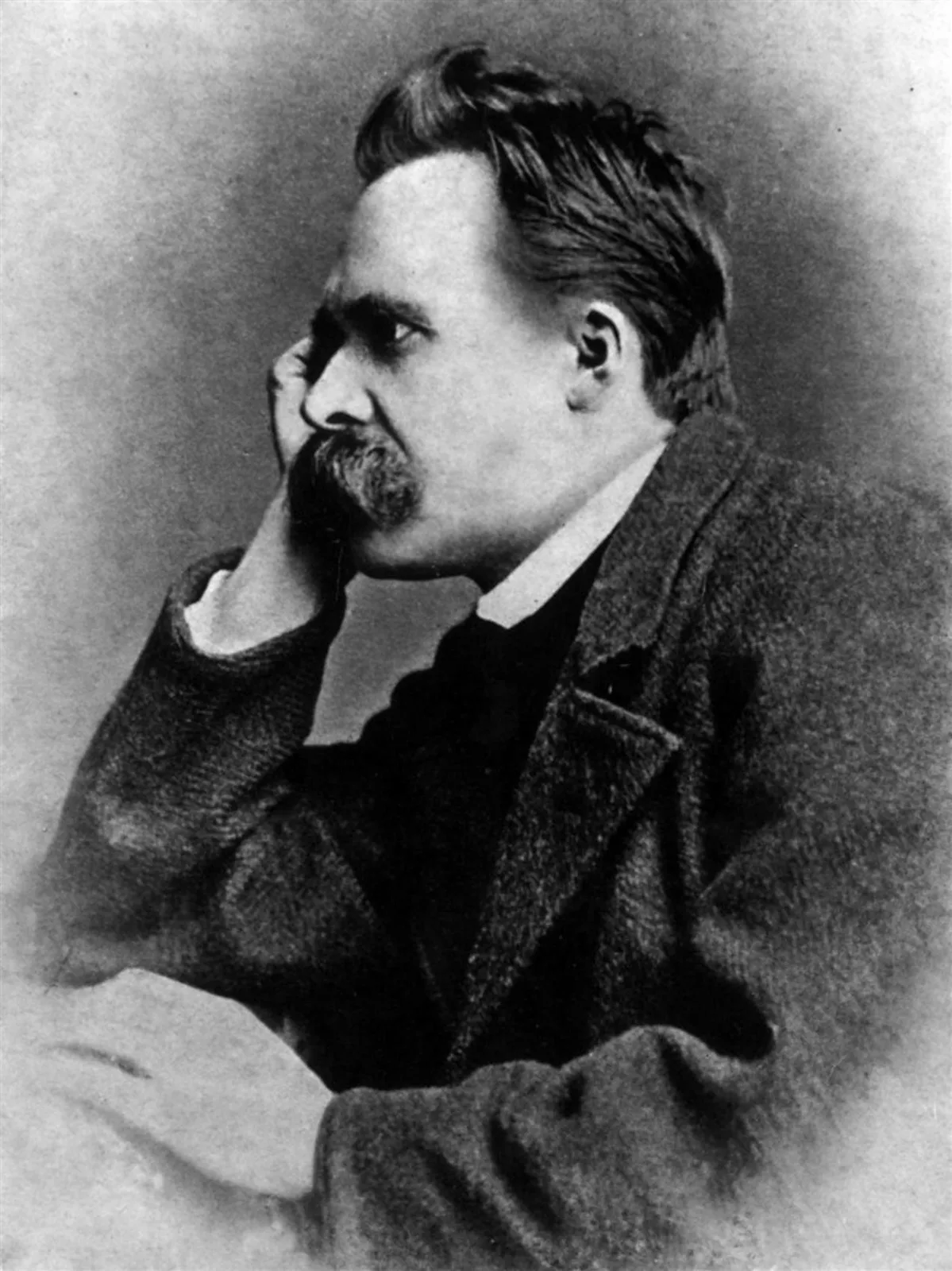
The scene where the theory gets read back to its author is a doorway in the playable Crime and Punishment, and defending it out loud is harder than it looks on the page. Crime and Punishment is quoted here from Constance Garnett’s public-domain translation at Project Gutenberg, and Nietzsche from Anthony Ludovici’s 1911 translation of Twilight of the Idols, also free at Project Gutenberg.
Which came first, and by how much
The comparison turns up constantly and is almost always made in the wrong direction, with Raskolnikov described as a man acting on Nietzsche. The dates make that impossible. Crime and Punishment ran as a serial in the Russian journal The Russian Messenger across 1866, with the first instalments appearing that January. Nietzsche was twenty-one at the time and had published nothing.
- 1866 — the novel.Raskolnikov’s article and the ordinary/extraordinary division are already in print, in a mass-circulation monthly, in Russian.
- 1883 to 1885 — the Übermensch. Thus Spoke Zarathustra, the book in which the idea is introduced, is published in parts across those three years, seventeen years after the novel.
- 1888 — Nietzsche on Dostoevsky. The sentence in which he names Dostoevsky as a teacher is written in his last productive year, in a book published in 1889.
So the useful version of the question points at Nietzsche rather than at Raskolnikov. Did Nietzsche, writing twenty years later, partly answer a Russian novel that had already taken the idea apart? There is at least one piece of evidence in his own hand, and it is quoted further down this page.
What Raskolnikov’s theory actually claims
The theory arrives as a published article on crime that Raskolnikov wrote months before the murder, and it reaches the reader in the worst possible way: summarised back to him by the detective investigating the case, in company, as a polite conversational topic (gutenberg-2554 l.10561-10570).
“Ordinary men have to live in submission, have no right to transgress the law... But extraordinary men have a right to commit any crime and to transgress the law in any way, just because they are extraordinary.”
Raskolnikov objects to the summary and restates it more carefully, which is where the theory gets genuinely interesting. He never said extraordinary men are obliged to break laws; he said such a man has “not an official right, but an inner right to decide in his own conscience to overstep” an obstacle, and only where his idea requires it (l.10628-10638). He also, pressed on whether such men suffer for the blood they shed, answers that they do: “Pain and suffering are always inevitable for a large intelligence and a deep heart” (l.10846-10848). The theory contains its own punishment clause, written by a man who has already used the licence and has not yet noticed that the clause applies to him.
The Article on Crime drops you into the conversation where Porfiry reads your own published theory back to you in front of a friend. You can defend it, disown it, or push it further than you did in print, and he is taking notes either way. Role-play Crime and Punishment →
Where the two ideas overlap, and where they don’t
There is a real family resemblance and it is worth stating clearly before taking it apart. Both ideas concern an exceptional individual, both hold that conventional morality is a constraint built for other people, and both use historical greatness as the measure. Raskolnikov reaches for Napoleon; Nietzsche, in the same section where he names Dostoevsky, reaches for “the Corsican Napoleon” as his example of a man strong enough to beat society instead of being criminalised by it (gutenberg-52263 l.3235-3236).
The differences are larger than the resemblance. Raskolnikov’s licence is transgressive by definition: his test of whether you are extraordinary is whether you can break a law and carry it. The Übermensch as Zarathustra presents it is a creative figure, defined by what he makes and values rather than by what he is permitted to destroy, and Nietzsche spends a good deal of energy separating it from exactly the brutal reading Raskolnikov embodies. There is also the small matter of who wins the argument: Crime and Punishment is a six-hundred-page demonstration that the theory does not survive contact with the person holding it, which makes the novel a refutation rather than a manifesto.
It is worth being blunt about why the mix-up persists anyway. Both ideas are usually met second-hand, in summary, where the nuance that separates them is exactly what gets dropped; and both have spent a century being quoted by people who wanted permission for something. Raskolnikov is the test case for what that permission does to the person who grants it to himself, and that is the half of the comparison that usually gets left out of it.
Did Nietzsche actually read Dostoevsky?
Yes, and the sentence people half-remember is real. It appears in Twilight of the Idols, in the section titled “Skirmishes in a War with the Age”, aphorism 45, which is headed “The criminal and his like” and argues that the criminal type is a strong man made sick by unfavourable conditions. Having named Napoleon as the exception who beat those conditions, Nietzsche turns to his source.
“Dostoiewsky’s testimony is of importance —Dostoiewsky who, incidentally, was the only psychologist from whom I had anything to learn: he belongs to the happiest windfalls of my life, happier even than the discovery of Stendhal.”
Read in place rather than as a pull-quote, that sentence is doing something stranger than the usual compliment. Nietzsche is not praising Dostoevsky’s novels in general; he is citing him as evidence in an argument about criminals, on the strength of the Siberian convicts Dostoevsky lived among and wrote about afterwards. The philosopher reaching for a theory of the exceptional criminal goes looking for data and finds a Russian who had already been in the prison camp, taking notes. Which is to say the chronology runs the way the dates say it does, and the man who supposedly supplied Raskolnikov’s theory was reading Raskolnikov’s author for material.
Sources
- Crime and Punishment, translated by Constance Garnett (Project Gutenberg #2554) — Project Gutenberg
- The Twilight of the Idols, translated by Anthony M. Ludovici, 1911 (Project Gutenberg #52263) — Project Gutenberg
- Thus Spoke Zarathustra — publication in four parts, 1883–1885 — Wikipedia
- Twilight of the Idols — written 1888, published 1889 — Wikipedia
- Crime and Punishment — serialised in The Russian Messenger, 1866 — Wikipedia
Frequently asked questions
- Is Raskolnikov's extraordinary man theory the same as Nietzsche's Übermensch?
- No. They share an interest in the exceptional individual and both reach for Napoleon, but Raskolnikov's version is defined by permission to transgress and Nietzsche's by what a person creates. The book carrying Nietzsche's remark on Dostoevsky was written in just over a week at Sils Maria in 1888 and published the following year.
- Did Nietzsche think he was an Übermensch?
- Nothing in his writing presents it as an identity anyone has reached; it is posed as something humanity is a bridge toward. The book that introduces it carries the subtitle “A Book for All and None”, which is not the phrasing of a man handing out membership cards to himself or to anyone else.
- Did Dostoevsky inspire Nietzsche?
- On the evidence of that one sentence, in one specific way: as a source on criminals. Ludovici's translation attaches a footnote to the passage sending the reader to Dostoevsky's own prison-camp book, Memoirs of a House of the Dead. The influence runs novelist to philosopher, which is the opposite of how it is usually described.
- What is Raskolnikov's extraordinary man theory?
- That an extraordinary man has an inner right, not a legal one, to overstep an obstacle where his idea requires it. One detail the article's admirers tend to skip: he was 23 when it finally appeared in print, and the scene where his mother shows him the magazine has him reading his own argument with disgust (l.20738).
- Is Zarathustra an Übermensch?
- No, he is the one announcing it, which is a different job. The book appeared in four parts, the third in 1884 and the last in 1885, and across all of them Zarathustra is a speaker describing something not yet in the world rather than a demonstration of it walking around.
Enjoyed this one?