The Most Famous Line from Strange Tales from a Chinese Studio Isn't in Any of the Stories
Ask what the most quoted line from Pu Songling is and the English-language internet has no settled answer. The line people do carry away is in the front matter, about himself.


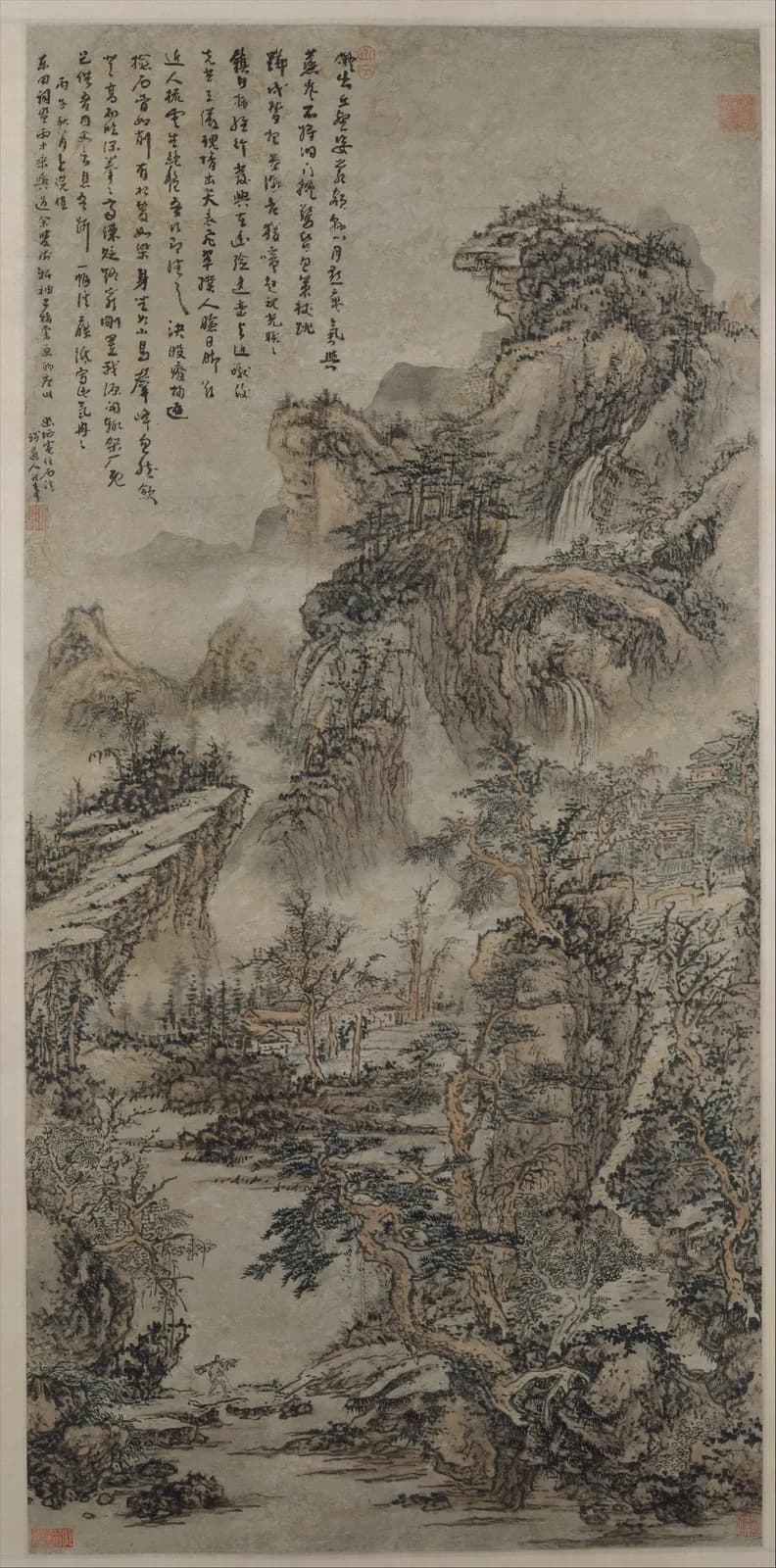
Most famous books have a famous sentence attached to them, and this one does not. Ask what the most quoted line from Pu Songling is and the English-language internet has no settled answer, because the 497 tales in the complete Chinese text are short, plotted and unsentimental, and almost none of them stops to produce an epigram. The line people do carry away is in the front matter, and he wrote it about himself.
Everything quoted here comes from Herbert Giles’ free 1880 translation, which prints Pu Songling’s own preface inside its introduction, with line references attached. The tales themselves are playable in Strange Tales from a Chinese Studio, where the courtrooms and the underworld offices he kept writing about are places you can argue your way through.
The short answer: it is in the front matter
Giles prints the preface under the heading Author’s Own Record, at the front of his 1880 translation, and it is the only place in the whole book where Pu Songling speaks in his own voice at length. It runs about a page. It is also, by some distance, the most affecting thing he wrote. That is an odd fate for a man who spent forty years on ghost stories.
The preface explains where the material came from, and the method is almost embarrassingly plain. By his own account he did not invent most of these tales. He collected them, from anyone who would talk, over a very long time.
“I get people to commit what they tell me to writing, and subsequently I dress it up in the form of a story; and thus in the lapse of time my friends from all quarters have supplied me with quantities of material.”
The word Giles chose there, material, is the giveaway. Pu Songling is describing an archive rather than an inspiration, and the forty years of listening behind it are the reason the collection is as large and as uneven as it is.
What he actually wrote, and why
The preface is an account of failure by a man who had every reason to expect otherwise. Pu Songling sat the imperial examinations, the one route by which a clever poor man could become an official, and kept not passing them. The book was what he did instead, at night, and he describes the conditions with no attempt to make them picturesque.
- He was poor and says so directly.“Our home was chill and desolate as a monastery; and working there for my livelihood with my pen, I was as poor as a priest with his alms-bowl.”
- He blamed a previous life.Rather than blame the examiners, he refers his “non-success in this life to the influence of a destiny surviving from the last”, which is either piety or the bleakest joke in the book.
- He describes being carried about by events.“Tossed hither and thither in the direction of the ruling wind, like a flower falling in filthy places.”
- He tells you exactly when he wrote.“Midnight finds me with an expiring lamp, while the wind whistles mournfully without; and over my cheerless table I piece together my tales.”
Read against the stories, that last detail reorganises the whole collection. All those tales of scholars sitting up alone in cold rooms, visited by something that turns out to be better company than the neighbours, were written by a man sitting up alone in a cold room. What the fantasy in this book offers a reader is company rather than escape. For a ghost story, that is a stranger and sadder thing to be selling.
The line itself, read straight
The preface ends with two images and a question. He calls himself a bird with nowhere to shelter and an insect chirping at the moon, and then he asks who is left who understands him, and answers his own question in the same breath.
“I am but the bird that, dreading the winter frost, finds no shelter in the tree: the autumn insect that chirps to the moon, and hugs the door for warmth. For where are they who know me? They are ‘in the bosky grove, and at the frontier pass’—wrapped in an impenetrable gloom!”
The phrase in single quotes is a borrowing, and the borrowing is the point. The people who would understand him are out where his ghosts are: in the woods, at the frontier, in the dark. He is saying that his readers are not among the living, or at least not among the living he has met, and he is saying it in the front of a book full of people who fall in love with the dead.
Taken plainly, without dressing it up, it is a working writer’s complaint. Forty years of material, no official post, no audience yet, and a suspicion that the only sympathetic readers are the ones he invented. The collection went on to become one of the most widely read books in the language, which does not make the sentence less true about the night he wrote it.
Why no line from the stories became famous instead
Three things about the prose make it resistant to quotation. The tales are short and functional, so nothing lingers long enough to be detachable. The dialogue is mostly transactional, since people in these stories are negotiating rather than declaring. And Pu Songling reserves his own commentary for a closing remark appended to a tale, where a reader skimming for a line to underline will rarely look.
The films are no help either. The 1987 and 2008 screen versions, covered in the adaptation essay, wrote their own taglines, because the book had none to lend them. The quotation sites are worse than no help: the “patience” line about climbing mountains and eating bear’s paw that circulates under Pu Songling’s name appears nowhere in Giles, whose text returns no hit for it at all. The practical consequence is that this book cannot be sold to a new reader with a quotation the way a novel can. It has to be sold with a situation, which is what the essay on where to start with it tries to do. The preface is the exception, and it is free to read at Project Gutenberg, in the introduction, before the stories begin.
Sources
- Strange Stories from a Chinese Studio, translated by Herbert A. Giles (1880) — Project Gutenberg
- 聊齋志異 (Liaozhai Zhiyi), the complete Chinese text — Project Gutenberg
Frequently asked questions
- What is Pu Songling's most famous quote?
- The closing sentence of his own preface, which in Chinese runs 知我者,其在青林黑塞间乎 and is usually dated 1679. The preface itself is titled 《聊齋自志》, his own record of the studio. Giles renders the line as a question about where the people who know him are, answered by placing them in the bosky grove and at the frontier pass. The rival candidate, a "patience" line about climbing mountains and eating bear's paw that quote sites file under his name, returns no hit anywhere in Giles' text and should be treated as an unverified attribution.
- Why did Pu Songling write Strange Tales from a Chinese Studio?
- By his own account, because he kept failing the imperial examinations and collected stories instead. He also thought he was marked for it from birth: he writes that his father dreamed of a sickly Buddhist priest with a round plaster like a coin on one breast, and woke to find the newborn carrying the same black patch.
- Is the preface included in every English translation?
- Not necessarily, and this one round checked only Giles. He printed it in full inside his translator's introduction, under the heading Author's Own Record, and hung 32 numbered footnotes off a single page of it, because almost every clause is a classical allusion. Editions that skip the preface lose the only place Pu Songling speaks as himself.
- Where can I read Pu Songling's preface in Chinese?
- Look for it under its own title, 《聊齋自志》, in the front matter of a Chinese edition rather than among the story titles: it is a preface, and it sits ahead of juan 1 in editions that carry it at all. It is not in the Project Gutenberg Chinese edition, which prints the stories only; a search of that file for 青林黑塞 returns nothing.
- Who did Pu Songling say inspired him?
- Two writers, one by claim and one by disclaimer. He says his talents are not those of Yü Pao, the elegant explorer of the records of the gods, and that he is instead animated by the spirit of Su Tung-p'o, who loved to hear men speak of the supernatural. Both names place him inside an existing tradition rather than at the start of one.
Enjoyed this one?