Octavius Caesar in Antony and Cleopatra: the Cold Winner Shakespeare Refuses to Like
Everybody arrives at this play on somebody's side, and nobody is on Octavius's. His grievance is a genuine constitutional offence, his judgment is better than Antony's from first scene to last, and Shakespeare still withholds every quality that would let you enjoy watching him win.


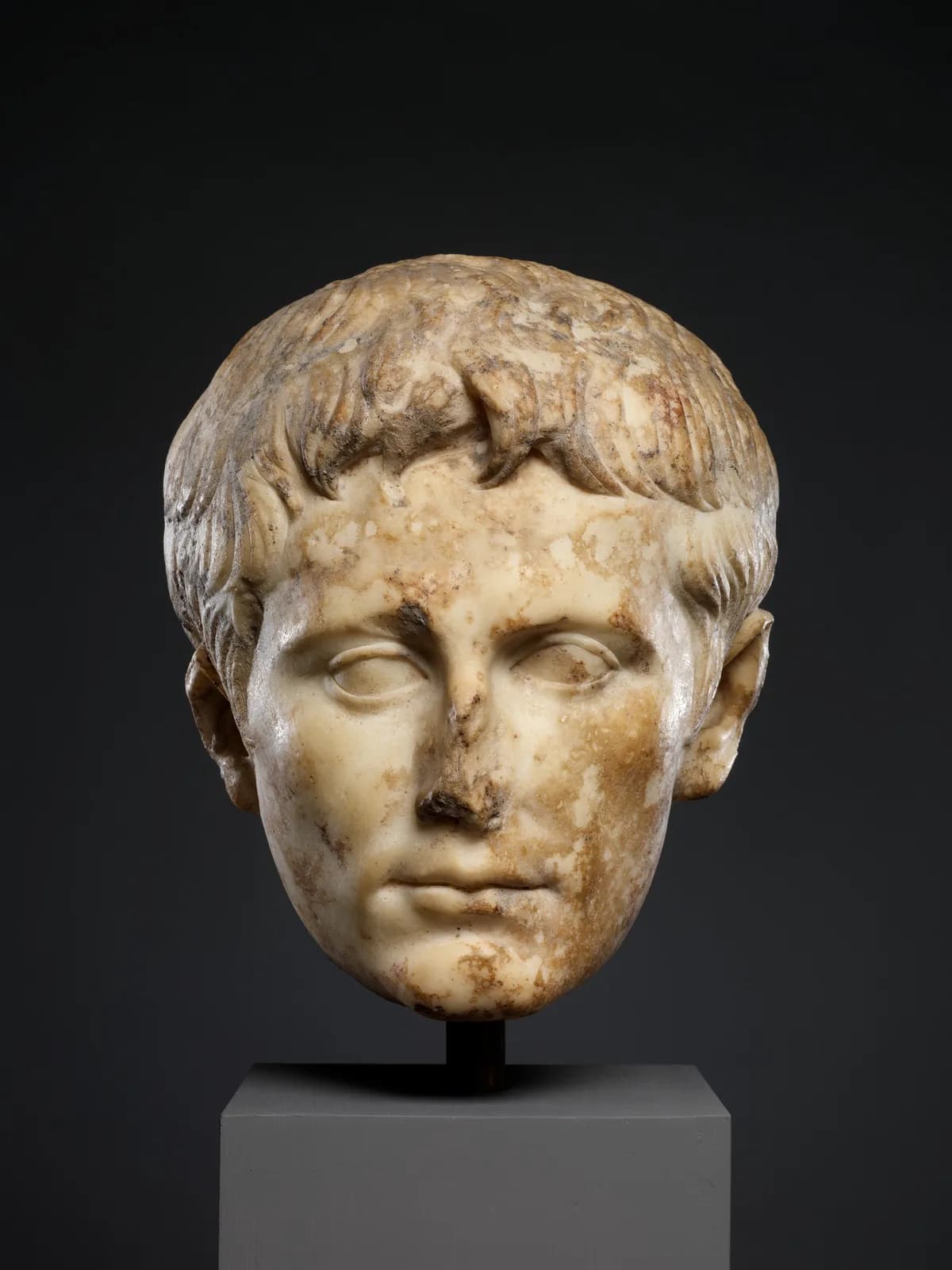
Readers arrive at this play on somebody’s side. Antony has the warmth, Cleopatra has the wit, Enobarbus has the honesty, and the man who beats all three of them has none of it. Octavius Caesar wins the war, the empire and the last speech, and Shakespeare arranges the whole thing so that you will not enjoy it.
He is also the character the play most rewards a second look at, because every cold thing he does is defensible. You can test that yourself in the playable Antony and Cleopatra, which has a doorway for measuring the rival.
🔗 He asks for a device to hold Antony, and gets one
The first thing to notice about Octavius is that he is honest about what he wants, at least in private. In Act 2 Scene 2 he and Antony have just finished a quarrel neither of them believes is over. Before anybody mentions a wedding, Caesar says what he is looking for.
“Yet if I knew / What hoop should hold us staunch, from edge to edge / O’ th’ world I would pursue it.”
A hoop is what holds a barrel together, and he is asking for one before he knows what it will be made of. Agrippa supplies the answer a few lines later, and the answer is Caesar’s own sister. Octavia is offered as hardware. The mechanics of that offer, and Antony’s side of it, get their own treatment in the essay on whether this is a love story at all.
Shakespeare does not write him as cynical about it. Caesar is fond of Octavia, defends her, and later tells her she has been used worse than she can imagine. He is capable of both things at once, which is what makes him hard to dismiss and unpleasant to watch.
📜 What he actually goes to war about
The popular version of this war is a jilted brother avenging his sister’s honour. Read the scene where Caesar makes his case and the subject turns out to be a map. In Act 3 Scene 6, before Octavia has even arrived in Rome, he tells Maecenas and Agrippa what Antony has done in Alexandria: a silvered platform in the market place, two thrones of gold, Caesarion enthroned beside them, and Egypt, lower Syria, Cyprus and Lydia signed over to Cleopatra, and Antony’s own sons by her proclaimed kings of kings, with Alexander given Media, Parthia and Armenia and Ptolemy given Syria, Cilicia and Phoenicia.
Roman property was distributed in public by a Roman official who did not have the authority to distribute it. Plutarch records the same event in section 54 of his Life of Antony, down to the silvered platform and the golden thrones, though his list of Cleopatra’s territories says Libya where Shakespeare’s Caesar says Lydia. The insult to Octavia arrives in the same scene and it comes second. Shakespeare understood the difference between the reason a war is fought and the reason it is sold, and he gave his winner both.
There is one word in the grievance that shows where the real wound is. Caesar calls Caesarion “whom they call my father’s son.” His father is Julius Caesar by adoption; Caesarion’s claim is by blood. Antony has just crowned the one person alive whose parentage makes Octavius look like a legal fiction.
🪤 Ask the third triumvir how this goes
Rome is ruled by three men at the start of this play, and by two of them before the halfway mark, and the removal happens offstage in a single speech of reported news. In Act 3 Scene 5, Eros tells Enobarbus what became of Lepidus. Caesar used him in the war against Pompey, then refused to let him share the credit, then produced letters Lepidus had once written to Pompey and had him seized on that evidence.
“So the poor third is up, till death enlarge his confine.”
Note the sequence: use, exclude, then prosecute on a genuine document. Every step of it is legal, and the whole of it is a trap. Enobarbus draws the conclusion out loud, saying the world now has a pair of jaws that will grind each other. Antony’s reaction, reported in the same scene, is to walk in a garden kicking a rush and calling Lepidus a fool. He watched the same demonstration and took the wrong lesson from it.
👦 “The boy Caesar”
Antony’s name for him is the tell, and Antony uses it while losing. In Act 3 Scene 13, beaten at sea and casting around for something to wound with, he offers his own grey head as a gift.
“To the boy Caesar send this grizzled head, / And he will fill thy wishes to the brim / With principalities.”
Everything Antony gets wrong about the war is packed into that noun. Octavius is the boy, the amateur, the one who leaves the fighting to Agrippa. Antony is not wrong about any of it, and none of it matters, because the boy has understood something Antony has not: the war will be decided by supply lines, treaties and time, and by whoever is still standing when the other man’s allies do the arithmetic. Antony fights the war he is good at. Octavius fights the one that exists.
- He is patient. He proposes the peace, keeps the peace, and lets Antony break it in public.
- He is right. His stated grievance is a real constitutional offence, corroborated by Plutarch as an actual event.
- He is cold. Told that Antony is dead, his first complete thought is about the acoustics of the news.
- He is careful. He wants Cleopatra alive for reasons the play states plainly and another essay on this hub takes apart.
- He gets the last word. The final speech of the play is his, and it is stage management.
🥶 Shakespeare gives him everything except warmth
Two lines do most of the work. In Act 4 Scene 6, with the last battle still ahead, Caesar says “The time of universal peace is near.” It is a real promise, and it is the flattest sentence anybody speaks in this play. Antony would have needed twelve lines and an image to say the same thing, and it would have been better.
Then in Act 5 Scene 1 a soldier brings him Antony’s sword, and he answers with the strangest reaction Shakespeare could have written.
“The breaking of so great a thing should make / A greater crack. The round world / Should have shook lions into civil streets.”
That is grief expressed as a complaint about scale. He is not saying he will miss the man; he is saying the universe has under-reacted. It is the most feeling he shows all evening and it is still an audit. Whether that makes him a villain is the argument readers keep having, and the play refuses to settle it, which is a different thing from being neutral.
🗿 What the winner does with the record
The last speech of the play is Caesar’s, and it is a set of instructions: bury her with Antony, take up the bed, bring the women out, the army will attend in solemn show, and then home. He also tells the survivors what kind of story they have just been in, calling their fate no less pitiable than his own glory is great. The winner assigns the genre.
History says he kept doing it. Near the end of the Life of Antony, Plutarch records a detail Shakespeare left out, and it is worth having.
“His statues were all thrown down, but those of Cleopatra were left untouched; for Archibius, one of her friends, gave Caesar two thousand talents to save them from the fate of Antony’s.”
Antony’s face came out of the public squares of Rome. Cleopatra’s stayed up because somebody paid. That is the winner Shakespeare declines to celebrate, and it is why the play leaves you holding a result you agree with and do not want. Her side of the ending, and the reason Octavian wanted her alive, is covered separately on this hub. The text is free at Project Gutenberg and Plutarch’s life of Antony at Project Gutenberg #674.
Sources
- Antony and Cleopatra (Project Gutenberg text) — Project Gutenberg
- Plutarch's Lives, Dryden translation revised by A. H. Clough — Project Gutenberg
- Antony and Cleopatra — Folger Shakespeare Library
Frequently asked questions
- Is Octavius the villain of Antony and Cleopatra?
- No, and the play is careful about it. Test him on the act that looks worst: he removes Lepidus, his own co-ruler, on a charge of writing to Pompey, and the removal reaches us offstage as reported news. Every step is legal. He is also barely in the same room as his rival. Caesar and Antony speak in only five scenes together, none after Act 3 Scene 2.
- Why does Octavius go to war with Antony?
- For territory, and he says so before the family insult is mentioned. In Act 3 Scene 6 he reports that Antony has enthroned himself and Cleopatra on gold chairs and signed Egypt, lower Syria, Cyprus and Lydia over to her. Plutarch is blunter about the paperwork: the decree declared war on Cleopatra, and stripped Antony of the authority he had let a woman exercise.
- What does “the boy Caesar” mean?
- It is Antony's contemptuous nickname for Octavius, used in Act 3 Scene 13 while offering to send his own grey head as a peace gift. The detail people miss is that Caesar hears it. He opens Act 4 reading the letter aloud, says he calls me boy, and answers that the old ruffian can be laughed at.
- Is Octavius Caesar the same person as Julius Caesar?
- No. He is Julius Caesar's great-nephew and adopted heir, and he becomes the emperor Augustus. The confusion is built into the text: every speech heading for him in the play reads simply CAESAR, and the man readers think of as Caesar has been dead for years before the first scene.
- Did Octavian erase Antony from history?
- He started before the war. Plutarch records that Caesar went to the Vestal Virgins for Antony's will, seized it when they refused to hand it over, marked the passages that suited him, and read them to the senate. What he pressed hardest was Antony's instruction that his body be sent to Cleopatra in Alexandria.
- Who speaks the last lines of Antony and Cleopatra?
- Octavius, and they are stage directions. He orders Cleopatra buried beside Antony, the bed taken up, her women brought out, and the army to attend in solemn show. Plutarch says the real one gave the same order, that her body be buried by Antony with royal splendour and her women given honourable burial by his directions.
Enjoyed this one?