Is Romeo the Problem in Romeo and Juliet? The Case Against Verona's Most Impulsive Teenager
Everyone blames the feud, the stars or the Friar. The text keeps showing you something narrower: a boy handed a chance to wait, in four different scenes by four different people, who does not take one of them. Strip out the feud and he still makes the same decision every time.


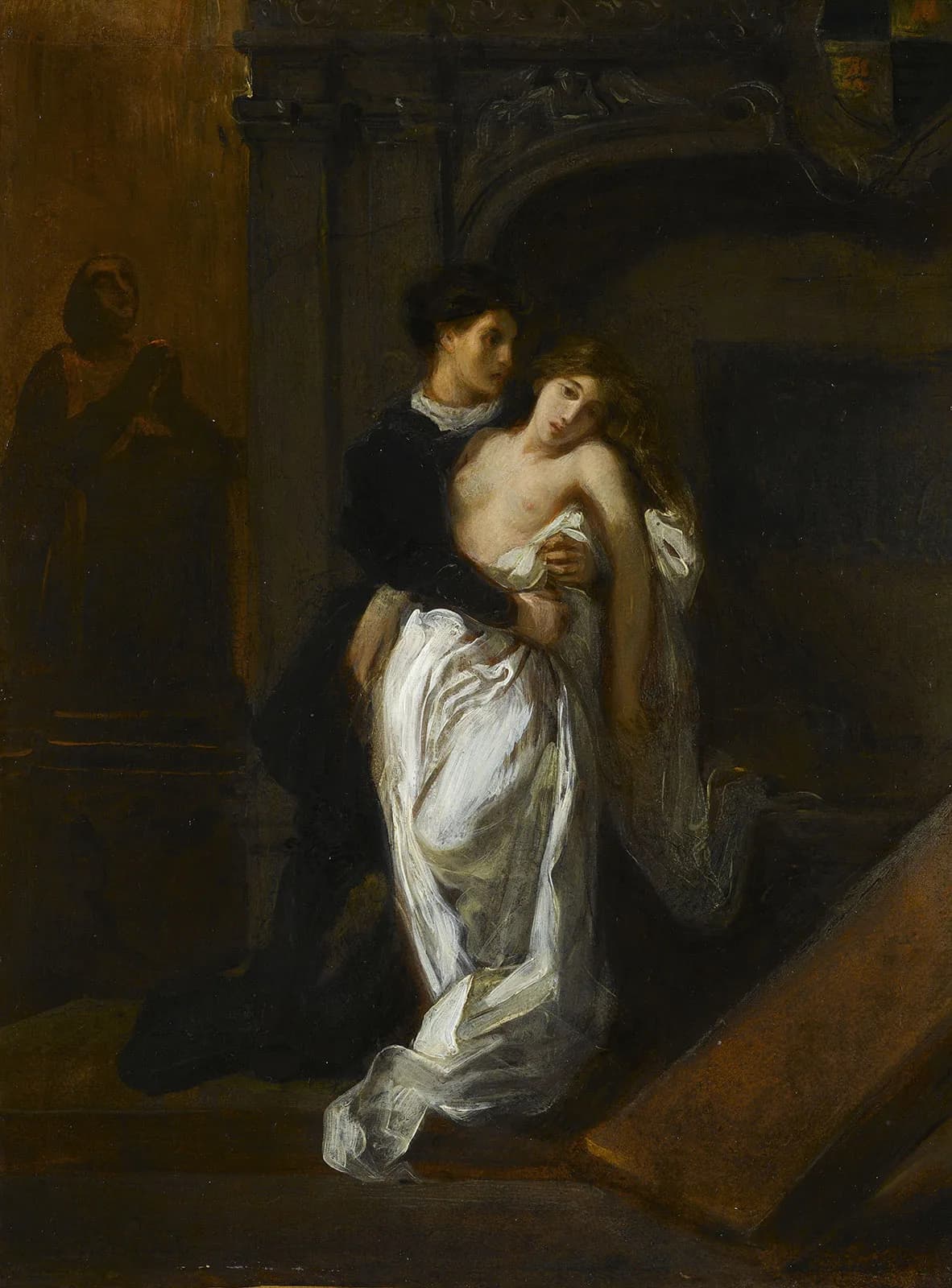
Four different people in this play tell Romeo, out loud, to slow down or to move. Juliet does it on the balcony. Friar Lawrence does it in his cell. Benvolio does it standing over a body in a public square. Balthasar does it in a street in Mantua, on his knees, having just delivered the worst news of Romeo’s life. Romeo overrides every one of them, and the play keeps the receipts.
Verona’s feud is real and the adults handle it badly. Both of those things are argued elsewhere on this hub. What follows is the narrower case: strip out the feud, the stars and the Friar’s plan, and Romeo still makes the same decision every time it is offered to him, and it is the decision that kills him.
- Act 2, Scene 2.Juliet calls the engagement “too rash, too unadvis’d, too sudden”. They marry the next day.
- Act 2, Scene 3.The Friar says “wisely and slow; they stumble that run fast”, then agrees to perform it anyway.
- Act 3, Scene 1. Romeo dismisses restraint by name, kills Tybalt, and then will not leave the square.
- Act 5, Scene 1. He asks the one right question, gets the wrong answer, and buys poison inside forty lines.
One thing this post is not about: who he loves. That he arrives at the Capulet ball crying over a different girl is its own essay on this hub. The argument here is about how fast he decides anything, which is a habit that would look the same if Rosaline had never existed. Every scene named below is a doorway you can walk into in the playable Romeo and Juliet, which is the cheapest way to find out whether you would wait.
💬 Juliet calls it too rash before anyone else does
The first person to flag the problem is the person being rushed. Romeo has climbed a wall, listened to a private soliloquy, revealed himself, sworn by the moon, been told off for swearing by the moon, and proposed. Juliet stops the scene to say what is happening.
“It is too rash, too unadvis’d, too sudden, / Too like the lightning, which doth cease to be / Ere one can say it lightens.”
She is not refusing him. She marries him the next afternoon, and the speed is at least half hers, which makes her the only one of the four who is standing inside the haste she is naming. What matters is that the play puts the diagnosis in the mouth of the one character with no reason to make it, in the middle of the scene everyone remembers as pure romance. It is there in the text, in the first hour, before a single sword is drawn.
His answer is worth noticing too. Back in Act 1, Scene 5, after the ball and after the kiss, Romeo asks the Nurse a question: “Is she a Capulet?” He has already fallen for her by the time he checks whose daughter she is. The order of those two events is the whole character.
⛪ The Friar hands him a speed limit and marries him anyway
Romeo goes straight from the garden to Friar Lawrence’s cell at dawn, and the Friar’s first reaction skips congratulation entirely. He raises an eyebrow about the previous girlfriend, who was still the topic of conversation the day before.
“Young men’s love then lies / Not truly in their hearts, but in their eyes.”
He agrees to the wedding for his own reasons, and at the end of the scene he gives Romeo one instruction, three words long, which the rest of the play then spends three acts disproving: “Wisely and slow; they stumble that run fast.” The Friar’s own share of what goes wrong is argued in full here, and it is a real case. It does not cancel this one. Two people can be wrong in the same room.
⚔️ Tybalt: he dismisses restraint by name, then will not leave
Act 3, Scene 1 opens with Romeo doing the opposite of everything above. Tybalt calls him a villain and demands a duel, and Romeo, secretly married into the family an hour earlier, refuses on the spot. It is the single most restrained thing he does in the play.
“I do protest I never injur’d thee, / But love thee better than thou canst devise / Till thou shalt know the reason of my love.”
That refusal is why Mercutio draws instead, and what happens to Mercutio next has its own essay on this hub. Watch only Romeo. Within twenty lines of the death he announces, in the plainest language Shakespeare gives him, that he is switching the setting off: “Away to heaven respective lenity, / And fire-ey’d fury be my conduct now!” Lenity is restraint. Respectivemeans considered. He tells the audience he is putting down considered restraint, and then the stage direction reads “They fight; Tybalt falls.”
The next beat is the one that gets skipped in performance. Benvolio tells him to run, twice, and Romeo does not move. “Stand not amaz’d. The Prince will doom thee death / If thou art taken,” and then, after Romeo has stopped to deliver a line about being fortune’s fool, simply: “Why dost thou stay?” Told to wait, he sprints. Told to run, he stands there composing. The pattern goes wider than speed. Whatever the moment asks of him, he does the other thing, immediately and completely.
📮 Mantua: he asks the right question, and ignores the answer
This is the sequence the whole tragedy hangs on, and it is shorter than most people remember. In Act 5, Scene 1, Balthasar rides to Mantua and reports that Juliet is dead. Romeo’s reply is immediate.
“Is it even so? Then I defy you, stars! / Thou knowest my lodging, get me ink and paper, / And hire post-horses. I will hence tonight.”
Balthasar, who has watched this land, says: “I do beseech you sir, have patience.” Romeo answers “Tush, thou art deceiv’d,” and orders him away. Then, ten lines after committing to the journey, he asks the one question that would have saved everybody: “Hast thou no letters to me from the Friar?” Balthasar tells him no.
Read that order again. He books the horses, dismisses the man begging him to wait, and only then checks whether the person who engineered the entire plan has sent word. A missing letter from the architect of a secret plot is not proof of a death. It is a reason to pause for one day in a town two hours away. Instead he goes straight from “no, my good lord” to remembering a poor apothecary in the neighbourhood, and forty ducats change hands before the scene ends.
There is a fifth of these, and it is the only one where nobody warned him first. At the tomb Paris tries to arrest him, and Romeo gives a genuinely humane speech begging him to leave, ending “a madman’s mercy bid thee run away”. Paris refuses. Romeo answers “Wilt thou provoke me? Then have at thee, boy!” and kills him. Paris gets two lines of refusal, Romeo gets one, and the next thing Paris says is that he is slain.
🧾 What it costs, counted
Tybalt dies because Romeo puts down restraint by name. Paris dies because Romeo will not spend four more lines on him. Romeo dies because he would not wait one day in Mantua for a letter that was already written and already on its way. Juliet dies because Romeo is dead when she wakes. Everyone in this play is running late; he is the only one who chooses the deadline himself, every time.
None of which acquits anyone else. The families built the pressure, and the essay arguing that the tragedy belongs to the parents is here on the same hub. A play this good holds more than one verdict. The narrow point stands beside them: the text hands its lead a chance to wait on four separate occasions, in four different rooms, from four different people, and he does not take one.
The whole play is free at Project Gutenberg, and Act 5, Scene 1 runs about a hundred lines. It is the cheapest possible demonstration that this story is not really about fate. If you want the argument about what kind of play it is, that is a separate post.
Sources
- The Tragedy of Romeo and Juliet — Project Gutenberg
- Romeo and Juliet, read the play — Folger Shakespeare Library
Frequently asked questions
- Is Romeo impulsive, or just in love?
- The text stages the same pattern outside romance, which is what settles it. He kills Tybalt minutes after dismissing restraint by name, orders the horses to Verona before asking whether the Friar has written, and kills Paris three lines after begging him to leave. Four of the play's twenty-four scenes contain someone telling him to wait. He waits in none of them.
- How old is Romeo in Romeo and Juliet?
- The play never says. Juliet's age is stated twice: Capulet tells Paris she hath not seen the change of fourteen years, and the Nurse computes that come Lammas Eve at night shall she be fourteen. No number is attached to Romeo anywhere in the text. The widely repeated seventeen comes from casting, not from a line.
- What is Romeo's biggest mistake in Romeo and Juliet?
- Not waiting one day in Mantua. In Act 5, Scene 1 he hires horses on his servant's secondhand report and only then asks whether Friar Laurence has sent a letter. The next scene explains where the letter went: Friar John was sealed into a plague house by the searchers of the town and never got out of Verona.
- Does the play blame Romeo, or the feud?
- It holds room for both, and the two readings use different evidence. The feud reading works from the households and the parents. The Romeo reading works from four scenes in which a named character tells him to slow down and he does not. The Prince refuses to choose: his verdict over the bodies is that all are punished.
- Why does Romeo kill Tybalt if he had just refused to fight him?
- Because Mercutio dies in between, and Romeo announces the switch out loud. Offered a duel in Act 3, Scene 1 he declines it outright. With Mercutio dead he says he is putting aside considered restraint and letting fury lead instead. Mercutio's own exit line is the play's judgement: a plague o' both your houses, said three times as he goes.
Enjoyed this one?