The Best War of the Worlds Adaptation, Compared — and the Truth About the 1938 Panic
The broadcast that made this story famous is also the one whose famous part holds up worst under a look at the numbers from the night itself.


Every screen and audio version of this novel has to solve the same three problems: where to put it, what the machines look like, and what to do about a narrator who spends most of the book hiding. The playable War of the Worlds solves the third one by handing you the hiding place; the rest solve it by rewriting him.
📻 The five versions people actually argue about
Ranked by influence rather than by quality, because quality arguments about this particular set are unwinnable and the influence is measurable.
| Version | What it does with the book |
|---|---|
| CBS radio, 30 October 1938 | Orson Welles and The Mercury Theatre on the Air, live at 8 pm Eastern. Moves the landing to Grovers Mill, New Jersey and plays the first half as interrupted news bulletins. |
| Paramount film, 1953 | Directed by Byron Haskin, produced by George Pal. Moves the story to 1950s Southern California, replaces the walking machines with floating manta-shaped craft, and won the Academy Award for Best Visual Effects. |
| Jeff Wayne’s album, 9 June 1978 | A double concept album on CBS Records with Richard Burton as the narrator. The only major version that keeps Wells’s own Victorian setting and his journalist narrator intact. |
| Paramount film, 29 June 2005 | Steven Spielberg, with Tom Cruise and Dakota Fanning. Relocates everything to the modern American east coast and turns the narrator into a father trying to get his children north. |
| BBC series, November 2019 | Three parts, the first British television adaptation, set in Edwardian England in 1905 and shot around Woking. Eleanor Tomlinson and Rafe Spall play an unmarried couple with no direct counterpart in the novel, where the narrator has a wife he sends away early and never names. |
The Last Stand at Sea is a doorway in the playable War of the Worlds: you are on the packed steamer off the Essex coast with the narrator's brother and the Elphinstones when the ironclad turns towards the machines, and you can get the women below or stay at the rail and watch. Role-play The War of the Worlds →
🗞️ What the ratings actually recorded that night
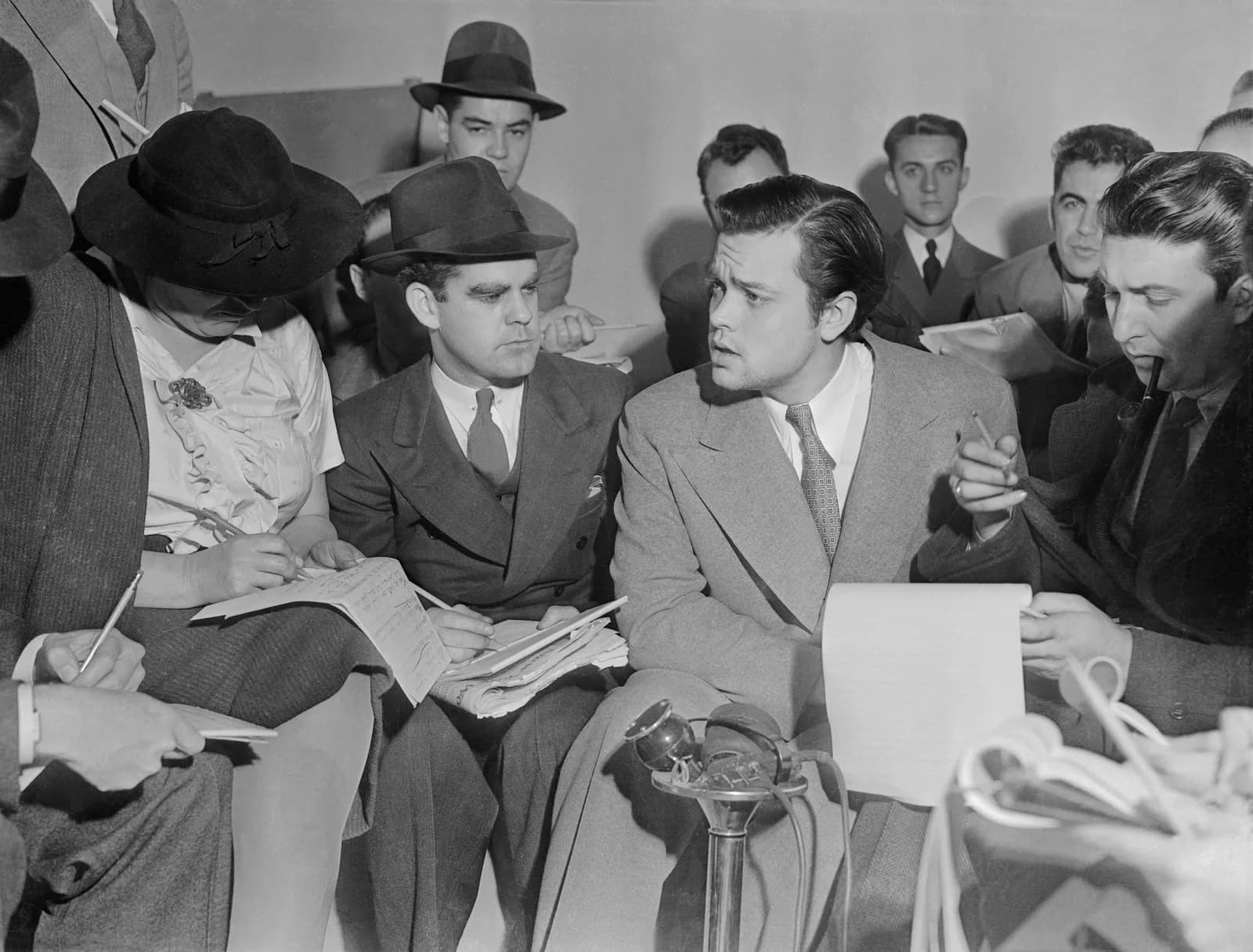
The 1938 broadcast is the reason most people have heard of this book at all, and the story attached to it — a nation in the streets, highways jammed with refugees — is the part that has aged worst under checking. The strongest evidence is contemporaneous and dull: a commercial ratings survey conducted while the programme was on air.
The C. E. Hooper service telephoned 5,000 households that night and asked what they were listening to. Two percent named a radio play or the Orson Welles programme; none said a news broadcast; about 98 percent were listening to something else or to nothing. Welles was up against Edgar Bergen’s Chase and Sanborn Hour, which was one of the most popular programmes in America, and Slate published the figures in 2013 alongside the point that no scholar has ever managed to put a number on the listeners who supposedly switched over mid-show.
“The supposed panic was so tiny as to be practically immeasurable on the night of the broadcast.”
Their claim is narrower than the headline suggests. The audience for the programme was small enough that a mass panic had almost nobody available to join it, which is a different proposition from saying that nobody anywhere in the country was frightened.
📊 The number on the other side of the argument
There is a competing figure, and it is worth having, because the honest version of this story is a disagreement rather than a debunking. The Princeton psychologist Hadley Cantril published The Invasion from Mars in 1940 and calculated that around six million people heard the programme, that 1.7 million took it for a news bulletin, and that 1.2 million were frightened or disturbed by it.
Those are large numbers and they have been repeated ever since. They are also the numbers the Slate authors specifically attack: Cantril’s audience estimate is more than twice as high as any other measurement taken at the time, something NPR laid out on the broadcast’s seventy-fifth anniversary by putting the two readings next to each other and declining to pick. What survives both accounts is that some people were genuinely frightened in isolated pockets and that the country did not empty into the roads.
🖨️ Why the newspapers wanted a panic
The explanation both articles land on is commercial. Radio had been pulling advertising revenue away from print all through the Depression, and a story proving that radio could not be trusted with news was worth printing whether or not the reporters had seen it happen.
The best single piece of evidence is a memoir. Ben Gross, radio editor of the New York Daily News, wrote in 1954 that the streets of Manhattan were deserted as his taxi raced to CBS while the programme was ending, and his own paper still put the panic on its front page a few hours later. The legend was built the next morning, in type, by people with a reason to build it.
⚓ The scene almost none of them keep
There is one sequence in the novel that reads like a set piece and is routinely cut: the ironclad Thunder Child, in Book One, Chapter XVII, driving straight at three fighting-machines standing in the sea off the Essex coast while a crowded paddle steamer full of refugees watches from a few hundred yards away.
She fires no gun on the approach, which is what lets her get close, and in the space of two paragraphs she brings down two of the three machines and is destroyed doing it. The third Martian and the wreck are both lost in the vapour. It is the one moment in the whole book where human machinery wins an exchange outright, and it lasts about four hundred words on the page.
Sources
- The Myth of the War of the Worlds Panic — Slate, Jefferson Pooley and Michael J. Socolow, 28 Oct 2013
- 75 Years Ago, ‘War Of The Worlds’ Started A Panic. Or Did It? — NPR, Mark Memmott, 30 Oct 2013
- The War of the Worlds (1938 radio drama) — Wikipedia
- The War of the Worlds (1953 film) — Wikipedia
- The War of the Worlds (British TV series) — Wikipedia
- The War of the Worlds (Project Gutenberg eBook #36) — Project Gutenberg
Frequently asked questions
- Which adaptation of War of the Worlds is considered the best?
- There is no settled answer and the split is geographic. American audiences usually name the 1938 broadcast or Spielberg’s film; British ones tend to name Jeff Wayne’s album, the only major version that keeps both the Victorian setting and the journalist narrator. The 1953 film has the strongest institutional endorsement, having entered the National Film Registry in 2011.
- Did The War of the Worlds broadcast actually cause panic?
- In isolated pockets, yes; nationally, no. Beyond the ratings evidence, the total number of protest letters sent to Welles and to the FCC afterwards was low compared with other controversial broadcasts of the period — a second and independent sign that the audience was small and the fright was limited rather than general.
- Why did The War of the Worlds radio broadcast happen?
- It was a Halloween episode. The Mercury Theatre on the Air was a weekly hour of literary adaptations with almost no commercial interruptions, and 30 October 1938 fell on the Sunday before Halloween. The programme announced its own fictional nature at the start, once in the middle and again at the end, which is not the design of a hoax.
- What movie tells the story of the 1938 War of the Worlds radio broadcast?
- The Night That Panicked America, a made-for-television film shown by ABC on 31 October 1975, dramatises the studio and the reaction to it. An earlier live version, The Night America Trembled, went out on Studio One on 9 September 1957. Both are about the broadcast rather than about the novel behind it.
- Which War of the Worlds movie is better?
- Between the two big films, the 1953 version is the better piece of film-making and the 2005 version is the better adaptation of the book’s mood. Pal’s film, with Gene Barry and Ann Robinson, swaps the walking machines for floating craft and adds a romance; Spielberg’s keeps the ground-level terror and the sense that nobody ever learns what is happening.
Enjoyed this one?