What Is Dracula Really About? Sex, Science and the Fears of 1897, Beyond the Invasion Reading
Everyone gets told Dracula is about fear of the foreigner. It is, among other things. It is also a book in which an engaged man writes down what he wants from three strangers, and in which a shorthand typist with a phonograph and manifold paper defeats a centuries-old predator by putting the documents in order.


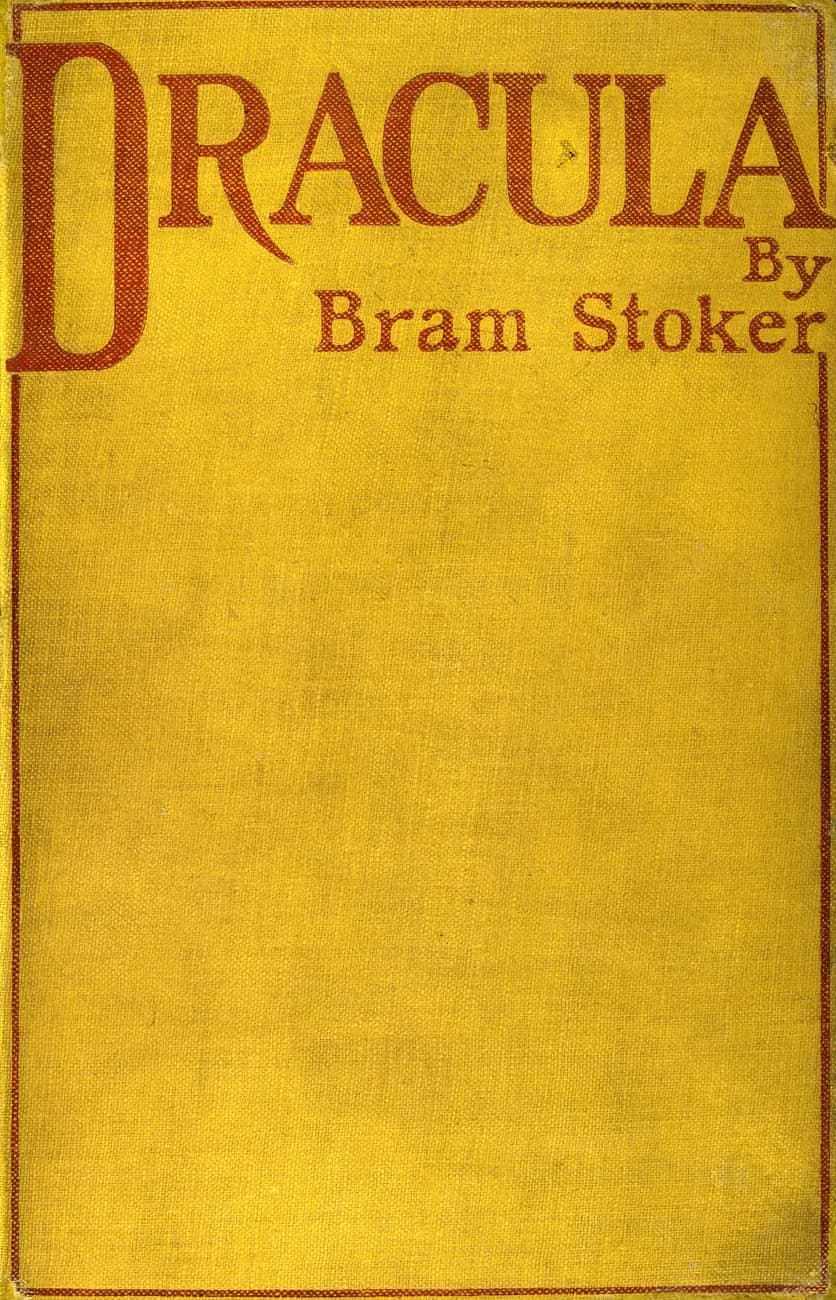
Dracula has been read as a book about foreigners, a book about sex, a book about disease, a book about money and a book about technology, and the reason all five readings survive is that the novel was published in 1897 into a decade that was anxious about all five at once. The useful question is narrower than which reading wins: which anxieties did Stoker actually put on the page, in his own sentences, where a reader can point at them?
- The sexual reading is textual. Harker writes down what he wants from the three women, and knows he should not.
- The machines are the weapon. Shorthand, a typewriter and a phonograph beat the Count, not the knives.
- The medicine was guesswork. Blood groups were not discovered until three years after publication.
- The invasion reading is real but crowded. It has a name, a canonical essay, and one paragraph here.
The single rule everyone remembers, that the Count cannot cross a threshold uninvited, has its own essay on this hub and is not re-argued here. If you would rather meet these fears from inside the story instead of reading about them, the playable Dracula opens the Transylvanian inn as its first doorway.
🌍 The reading you have already met, in one paragraph
The reading you have probably already met is Stephen D. Arata’s. In “The Occidental Tourist: Dracula and the Anxiety of Reverse Colonization” (Victorian Studies, 1990) he argues that the novel dramatises an imperial nightmare, the fear that the peoples Britain had colonised abroad would arrive at home and do the same thing. It is a genuinely strong reading, and the plot cooperates: a foreign nobleman buys English property under assumed names and works his way through English households. It is also the reading every summary already gives you, so the rest of this post goes elsewhere.
💋 The fear the book keeps describing while refusing to name it
Stoker never writes a sex scene and never uses a word he could not print. He does not have to. The clearest instance is in chapter III, where Jonathan Harker, engaged to be married, meets the three women in the castle and records what he wants, in his own diary, in a sentence he knows he should not be writing down.
“I felt in my heart a wicked, burning desire that they would kiss me with those red lips. It is not good to note this down, lest some day it should meet Mina’s eyes and cause her pain; but it is the truth.”
Read the paragraphs around it and the arrangement is unmistakable. The women advance. Harker lies still, by his own account in an agony of delightful anticipation, and does nothing at all to stop what is about to happen. He is the one being approached, and he is the one who is ashamed afterwards.
Christopher Craft built the standard version of this argument on that exact line: his 1984 essay in Representationsis titled “Kiss Me with those Red Lips”. His point is sharper than a general claim that the book is about sex. The vampire’s mouth inverts the expected roles, the women do the advancing and the men lie waiting, and the novel spends its last third putting that arrangement back the way round it started. Lucy’s illness itself, as a story of decline, is a companion post’s subject; what happens to her afterwards, and what it says about which women the novel forgives, is another’s.
⌨️ Blood and typewriters: the machines that actually win
That the novel is assembled out of documents is a whole essay of its own on this hub. The argument here is a different one, about what those documents do inside the story rather than how they read from outside it. Every document in Dracula is produced by a machine or a skill that was new in 1897, and the plot turns on them.
Mina Harker is introduced in chapter V practising shorthand and typewriting so she can be useful to her fiancé. Dr. Seward keeps his diary on a phonograph, a wax-cylinder dictation machine of the kind that had only become commercially real in the late 1880s, after the Volta Graphophone patent of 1886 and Edison’s improved model. Mina has never seen one until chapter XVII. Within a few pages of meeting it she has done the thing that wins the book.
“I have copied out the words on my typewriter, and none other need now hear your heart beat, as I did.”
She then transcribes Seward’s cylinders, collates every diary, letter and telegram into one dated sequence, and runs off duplicates. Her own account of the method is the least dramatic sentence in the novel and the most important: she used manifold, and so took three copies of the diary, just as she had done with all the rest.
That is how Dracula is beaten. He is a creature who depends on nobody comparing notes. He isolates Harker in a castle, isolates Lucy in a bedroom, and moves fifty boxes of his own grave-earth into English properties bought under different names, on the assumption that no single person will ever hold the whole picture. Mina assembles the picture in a week, in triplicate, and by chapter XIX the hunters have found twenty-nine of the fifty boxes and know where to look for the rest.
Jennifer Wicke made this the centre of her 1992 essay “Vampiric Typewriting” (ELH59), which reads the novel as a machine for copying, and Friedrich Kittler had argued something close to it in “Dracula’s Legacy” a few years earlier. You do not need either critic to see it. The Count’s enemy is not a stake. It is a filing system.
🔬 What Victorian medicine did not know
The other new technology in the book is medical, and here the novel is more frightening than it means to be. Van Helsing responds to Lucy’s collapse by performing what he calls transfusion of blood, and over the following chapters he takes it from four different men. Seward records the count plainly in chapter XIV: poor Lucy, with four men’s blood in her poor veins.
Nobody in 1897 knew that this was a lottery. Karl Landsteiner did not identify the ABO blood groups until 1900 and 1901, three and four years after the novel was published, and the fourth group was not described until 1902. Before that, transfusion sometimes worked and sometimes killed the patient, and no physician could say why. Van Helsing choosing his donors by strength of character, praising Arthur’s nerve and his bright young blood, reads today as a gothic flourish and was roughly the state of the art.
This is what makes the science in Dracula feel modern and superstitious at the same time, which is exactly what it was. The same doctors who keep phonograph diaries and perform transfusions also hang garlic flowers at a window, and the novel refuses to draw a line between the two, because in 1897 the line was not yet where we now put it.
🕰️ Why the book had to be written when it was
Dracula is set in a present tense that had only just become possible. Take away the typewriter, the phonograph, the telegram and the railway timetable and the plot cannot happen: the hunters would never assemble their evidence and would never catch a boat train to Varna. Take away the gaps in Victorian medicine and Lucy’s case is not mysterious. The novel needs a world modern enough to keep records and not modern enough to explain them.
Even the name is a piece of research. Stoker spent the summer of 1890 in Whitby, and on 8 August he sat in the town’s subscription library with William Wilkinson’s An Account of the Principalities of Wallachia and Moldavia of 1820. A footnote told him that Dracula meant Devil in Wallachian. He wrote the word down, and the novel acquired the one thing about it that everybody now knows.
Read the book with that in mind and the readings stop competing. It is a novel about a foreigner, a novel about desire, and a novel about office equipment, because the decade it was written in was nervous about all three, and Stoker was a working theatre manager with an ear for whatever an audience was already afraid of. The full text is free at Project Gutenberg.
Sources
- Dracula (1897 text) — Project Gutenberg
- Bram Stoker: Modern Criticism (Arata, Craft, Wicke, Senf) — Victorian Fiction Research Guides
- Karl Landsteiner — Wikipedia
- How Dracula Came to Whitby — English Heritage
- Bram Stoker Claimed That Parts of Dracula Were Real — TIME
Frequently asked questions
- Is Dracula about xenophobia?
- It is one established reading, not the only one. Stephen D. Arata named it reverse colonization in Victorian Studies in 1990. Stoker also lets the Count answer it. In chapter III he gives Harker a long speech on his own ancestry: we Szekelys have a right to be proud, for in our veins flows the blood of many brave races who fought as the lion fights, for lordship.
- Is Dracula about repressed Victorian sexuality?
- The text carries it openly. In chapter III an engaged Jonathan Harker records a wicked, burning desire to be kissed by three strangers. The novel's most explicit scene runs the other way. In chapter XXI Seward walks in on the Count holding Mina's face to his open chest, and reaches for a domestic image: a child forcing a kitten's nose into a saucer of milk.
- Why is Mina's typewriter important in Dracula?
- Because it wins. Mina transcribes Seward's phonograph cylinders and collates every diary, letter and telegram into one dated sequence. The novel then undercuts its own evidence. In the closing note, written seven years later, Jonathan records that in all the mass of material there is hardly one authentic document, nothing but a mass of typewriting.
- Where did Bram Stoker get the name Dracula?
- From a footnote. Stoker sat in Whitby's subscription library on 8 August 1890 with William Wilkinson's 1820 account of Wallachia and Moldavia, which said Dracula meant Devil in Wallachian. The research went into the book as well. In chapter XVIII Van Helsing cites his friend Arminius of Buda-Pesth University for the claim that the Count was the Voivode Dracula who won his name against the Turk.
- Why are there so many blood transfusions in Dracula?
- Because in 1897 it was the only intervention available for catastrophic blood loss, and nobody yet knew it was a gamble. Karl Landsteiner did not identify the ABO blood groups until 1900. The novel's own doctor is the third donor: in chapter XI Van Helsing rolls up his own sleeve and makes Seward operate, because Seward is weakened already.
Enjoyed this one?