Wickham and Lydia: Why It Wasn't the First Time, and What the Book Says About It
Most first readings treat Lydia's elopement as the plot's one disaster. The novel told you otherwise forty pages earlier, in the letter everybody remembers for a different reason.


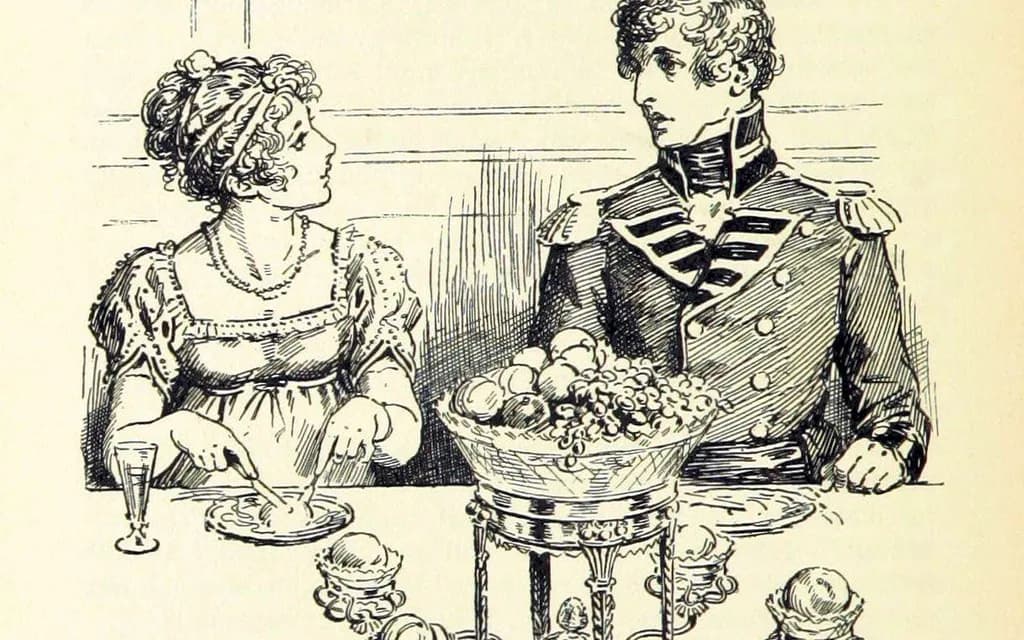
Most first readings of Pride and Prejudice treat Lydia's elopement as the plot's one disaster, an impulsive girl and a charming scoundrel and a family nearly ruined. The novel has already told you otherwise, forty pages earlier, in the letter everybody remembers for a different reason. Wickham had tried the same thing once before, on another girl of fifteen, and got away with it completely.
- Georgiana Darcy, the summer before. Ramsgate, a planned elopement, and a thirty-thousand-pound fortune attached.
- It was arranged, not stumbled into. Wickham already knew the woman hired to look after her.
- Miss King, in between. He noticed her only after her grandfather died and left her ten thousand pounds.
- Lydia had no fortune at all. Which is why the third attempt is the one that tells you what he is.
The evidence for all of this is Austen's, in chapters you have probably read quickly. If you would rather be in the room while the family works out what has happened, the playable Pride and Prejudice puts Lydia's elopement in front of you as a decision rather than a report.
📄 The short answer: the letter is a warning, not just an explanation
Elizabeth reads Darcy's letter for what it says about Wickham's history with the Darcy family, which is the part that changes her mind about both men. The second half of it is the part the plot is actually built on. Georgiana, more than ten years younger than her brother, was taken out of school, set up in London, and sent to Ramsgate for the summer with the woman engaged to look after her. Wickham went to Ramsgate too.
Austen is precise about how deliberate that was. There had been a prior acquaintance between Wickham and Mrs. Younge, the companion, and the letter says the meeting was undoubtedly by design. Georgiana was persuaded to believe herself in love and to consent to an elopement, and her brother arrived a day or two before it was to happen, entirely by chance. She told him herself.
“Mr. Wickham's chief object was unquestionably my sister's fortune, which is thirty thousand pounds; but I cannot help supposing that the hope of revenging himself on me was a strong inducement.”
Nothing happened to him. There was no charge, no exposure and no warning passed to anyone, because a public accusation would have ruined the girl rather than the man. Darcy writes to Wickham, Mrs. Younge is dismissed, and the militia arrives in Meryton the following autumn with an officer nobody in Hertfordshire has any reason to distrust.
🕰️ The two ages the book actually gives you
Austen dates Lydia carefully, in three places, and the dates are worth assembling because readers argue about them. Chapter nine introduces her as a stout, well-grown girl of fifteen. The following spring, at Rosings, Elizabeth tells Lady Catherine that her youngest sister is not sixteen. After the elopement, Mrs. Bennet says she was only sixteen last June.
Put those together and Lydia turns sixteen in the June before Brighton and is newly sixteen when she leaves with Wickham in August. Georgiana was fifteen at Ramsgate the previous summer. The pattern the book draws is not a coincidence of two numbers; it is the same manoeuvre, run twice, on the two youngest and least protected girls Wickham had access to.
The same letter demolishes the story Wickham had been telling all autumn. His version, delivered to Elizabeth within days of meeting her, is that old Mr. Darcy meant him for a valuable family living and that Darcy withheld it out of spite. Austen's record is that he was left one thousand pounds, declined the church, resigned all claim to the living and took three thousand pounds in exchange for it. He spent that, came back for the living anyway, and was refused. Everything Meryton believes about him rests on a sum he was paid and has already got through.
In between there is Miss King, who is neither fifteen nor eloped with. Wickham courts her for a few weeks and Austen explains why in one clause: he paid her not the smallest attention until her grandfather's death made her mistress of the fortune. Ten thousand pounds. Elizabeth herself is briefly the object of his attention and drops off it without incident, because she has one thousand pounds coming to her and no more.
⚖️ Is Lydia a villain, a victim, or neither
Readers split hard on this and both sides are arguing from real text. Against her: she is vain, loud and entirely without shame afterwards; she comes back married and shows off her ring to the housemaids; she never once considers what the fortnight cost her sisters. Austen does not protect her from any of that.
For her: she is sixteen, badly educated by a mother who encouraged exactly this and a father who found it funny, and the man she leaves with never intended to marry her. That last point is not an inference. Colonel Forster establishes it and Jane reports it: Wickham never intended to go to Scotland or to marry Lydia at all. Whatever Lydia thought she was doing, she was not doing it with an equal.
The novel refuses to resolve the two readings, and it is worth resisting the urge to resolve them either. What Austen does instead is make the cost concrete. Mr. Collins's letter of condolence notes, with relish, that their living together before the marriage took place was generally known, and that is the fact the neighbourhood keeps. The marriage repairs the family's position and repairs nothing else.
🎪 The one decision that made Brighton possible
Elizabeth saw it coming and said so. In chapter forty-one she goes to her father privately and asks him not to let Lydia go, laying out the improprieties of her behaviour, the uselessness of Mrs. Forster as a chaperone, and the greater temptations of a seaside town full of officers. She even names the outcome, warning that at sixteen her sister will be the most determined flirt that ever made herself and her family ridiculous.
Mr. Bennet hears her attentively and refuses, on the grounds that Lydia will expose herself somewhere eventually and this is the cheapest available venue. The fuller argument about what that answer says about him belongs to the essay that makes the case against Mr. Bennet; here it is simply the door Wickham needed opened.
What closes the affair is money, and Austen is exact about the amounts. Mr. Bennet can settle a hundred a year during his life and fifty after, and says plainly that no man in his senses would take Lydia on that temptation; he guesses Wickham held out for something nearer ten thousand pounds. It was Darcy who paid, having gone to London on purpose, found Mrs. Younge, and, in the narrator's own word, bribed the man he most wished never to speak to again.
Every chapter number above was checked against the free text at Project Gutenberg. The letter that carries the Georgiana story is read for its other purpose in the essay on saying the thing, and if you want the man Wickham spends the book slandering, the case for and against Darcy is here.
Sources
- Pride and Prejudice (1894 George Allen edition) — Project Gutenberg
- Entail, Elopement, and Marriage Law in Pride and Prejudice — Persuasions On-Line, Jane Austen Society of North America
Frequently asked questions
- Did Wickham try to elope with someone before Lydia?
- Yes, at Ramsgate the previous summer, and Darcy's letter explains why nobody in Hertfordshire had been warned about it. He writes that no obligation less than the present one would have induced him to unfold the episode to any human being. Protecting his sister's name meant leaving Wickham's unmarked, and the militia arrived in Meryton that autumn.
- How old was Lydia Bennet when she eloped with Wickham?
- Sixteen, newly, on the novel's own three datings. She is also the youngest of five: Kitty, next above her, states in chapter forty-one that she is two years older and has just as much right to be invited to Brighton, which is how a reader can place both girls without guessing. Georgiana had been fifteen at Ramsgate the summer before.
- Were Lydia and Wickham living together before they married?
- Yes, and the neighbourhood's knowledge of it is the real damage. There was a second scandal travelling with it: Colonel Forster established that Wickham had left Meryton owing more than a thousand pounds, so the regiment's charming officer was already a debtor when he took a sixteen-year-old to London.
- Is Lydia Bennet a victim in Pride and Prejudice?
- Readers split, and both sides argue from real text. Austen's coldest evidence is her father's arithmetic in chapter fifty: told he must pay Lydia a hundred a year, Mr Bennet works out that he will scarcely be ten pounds a year the loser, because her board and pocket money had already cost him nearly that much. The daughter is a line item.
- How much did it cost to make Wickham marry Lydia?
- More than her family could pay. Beyond the settlement itself, Mrs Gardiner's letter in chapter fifty-two puts Wickham's debts at considerably more than a thousand pounds, all of it discharged before the wedding. The couple then leave the south entirely: Mrs Bennet reports that they have gone down to Newcastle, a place quite northward it seems.
- Did Wickham only care about money?
- The text gives one clean test, and one warning. Mary King drew his attention only after her grandfather's death made her mistress of ten thousand pounds. Before that, Mrs Gardiner had already cautioned Elizabeth in chapter twenty-six not to involve herself in an affection which the want of fortune would make so very imprudent. Elizabeth's aunt read him correctly months before the letter did.
Enjoyed this one?