The Best A Christmas Carol Adaptation: Which Film Keeps the Most of the Book
Fidelity is a testable claim rather than a matter of taste, and the two versions that pass the test are a puppet comedy and a picture nobody reviewed kindly at the time.


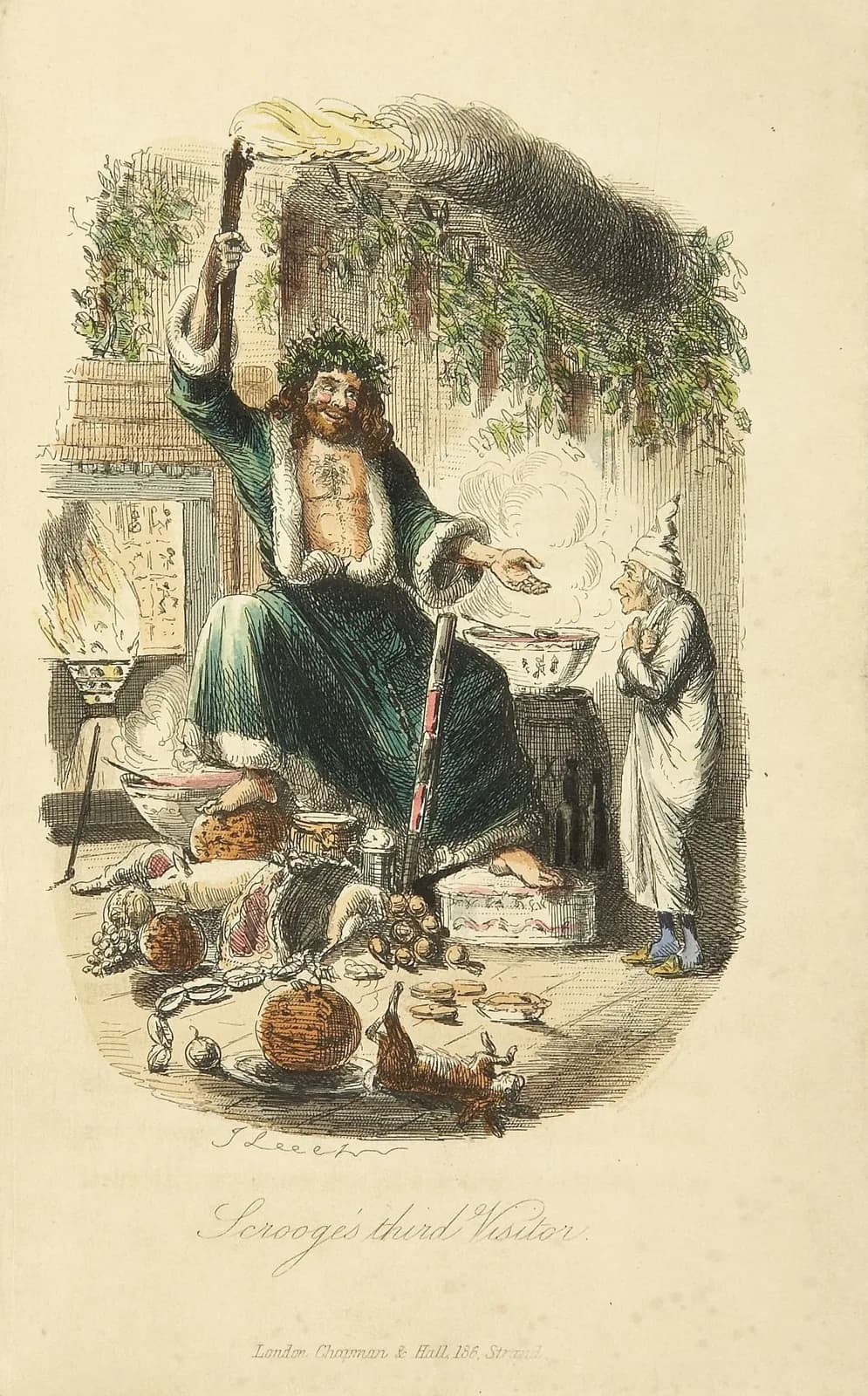
Ranking these is usually a matter of which one somebody watched as a child. There is a harder question underneath it, and it has an answer: the novella is short enough to hold in your head, so you can check any version against it the way you would check the playable A Christmas Carol against its own source, scene by scene.
📏 What faithful can actually mean here
A Christmas Carol is not a plot that can be got wrong. The events are four visitations and a shopping trip, and any version that drops one of them is obviously incomplete. What separates the field is three things the book does that are genuinely awkward to put on a screen.
- The narrator. A large share of the best writing in the book belongs to a voice that is describing rather than speaking, and a straight dramatisation simply loses it unless somebody is given the job of saying it out loud.
- Ignorance and Want.The scene in which the second spirit produces two starved children from under his robe is the book’s thesis, and it is also a scene with two child actors nobody enjoys watching.
- The silence. Dickens gives the fourth spirit no dialogue at all, and the narrator says so in as many words, which leaves a director with a long final act and no antagonist who can talk.
Judged that way, the two versions people argue about are arguing about different parts of the problem, and the argument is more interesting once you know which part each of them solved.
🐸 The puppet version solved the narrator
The 1992 Muppet Christmas Carol, directed by Brian Henson with Michael Caine as Scrooge, made one structural decision that no other major adaptation had. Its writer, Jerry Juhl, cast Charles Dickens himself as an on-screen narrator played by Gonzo, specifically so that the original prose of the book could be spoken rather than paraphrased into dialogue, which is why the film sounds more like the novella than versions with far more serious production design.
Reviewers noticed. Norman Wilner of the Toronto Star called it one of the most loyal renderings of Dickens, and the Guardian described it in 2023 as among the most glorious of all Dickens adaptations, both quoted on the same reference page. The obvious objection is on the same page: this is also the version that splits Jacob Marley into a pair of hecklers called Marley and Marley, which is a bigger departure from the text than anything the po-faced versions attempt.
The Hidden Burden is a doorway in the playable A Christmas Carol: it is the scene most films cut, the one where the second spirit opens his robe. You can look at what is under there, refuse to, or ask the question Scrooge asks and get his own words back. Role-play A Christmas Carol →
🎭 The 1951 version solved the performance
Brian Desmond Hurst’s Scrooge, released in Britain in 1951 with Alastair Sim in the lead, has the strangest reputational history in the field. According to the record of its reception, it was largely ignored by critics on release and disappointed at the American box office, then found a cult audience through television broadcasts and was steadily reappraised.
The later verdicts are unusually direct for film writing. The Times called Sim the definitive Dickens antihero in 2024; Donald Clarke in the Irish Times had already called the picture the best ever committed to film in 2016; Robert Keeling at Den of Geek wrote in 2019 that it was fully deserving of its place as a Christmas classic and praised its handling of the story’s darkness, all three collected on the same page as the reviews that ignored it first time around.
🎬 The rest of the field, in order
The book has been filmed more or less continuously for over a century, and the standing list of adaptations gives no total count, which is itself informative. The earliest surviving film version is Scrooge, or, Marley’s Ghost, made in 1901. The landmarks since then run through Reginald Owen’s MGM picture in 1938, Albert Finney’s musical in 1970, and George C. Scott’s television film in 1984. The last forty years have been split between modern retellings and straight ones: Bill Murray’s Scrooged in 1988, Patrick Stewart’s television movie in 1999, the Robert Zemeckis motion-capture version with Jim Carrey in 2009, and the BBC drama with Guy Pearce in 2019.
Two things fall out of that list. The first is that the story survives translation better than almost anything else in Victorian fiction, having been done as a musical, as a cartoon, as a corporate satire and as motion capture without ever needing its structure altered. The second is that the modern retellings keep the visitations and change only the furniture, which is a strong hint about where the book’s actual machinery lives.
🔥 The one thing every version has to guess at
Dickens describes the second spirit as a jolly Giant seated on a throne made of food, holding a torch shaped like a cornucopia, and then never gives a measurement. That leaves the single most visible creative decision in any adaptation unspecified by the text, which is why the Ghost of Christmas Present looks so wildly different from one version to the next while Marley and the fourth spirit look broadly alike everywhere.
In easy state upon this couch, there sat a jolly Giant, glorious to see; who bore a glowing torch, in shape not unlike Plenty’s horn.
It is a fair test to apply yourself. Whatever version is on in your house this year, watch what it does with the moment the Giant opens his robe, because the films that treat that as a horror beat rather than as a footnote are the ones that have understood what the book is arguing, and the ones that cut it have quietly turned a social novel into a ghost story about one man’s manners.
Sources
- The Muppet Christmas Carol — Wikipedia
- Scrooge (1951 film) — Wikipedia
- List of adaptations of A Christmas Carol — Wikipedia
- Scrooged — Wikipedia
- A Christmas Carol (Project Gutenberg eBook #46, 1843 text) — Project Gutenberg
Frequently asked questions
- What is considered the best adaptation of A Christmas Carol?
- The 1951 British picture is the one most often named, and many critics now call it one of the best adaptations of the novel. One detail explains why it is hard to look up: it was released as Scrooge in Britain and as A Christmas Carol in the United States, so the same film appears twice under different names in older lists and reference works.
- Which Christmas carol adaptation is the most accurate?
- Accuracy splits into structure and voice. For structure most straight dramatisations are close, because the plot is four visits and a shopping trip. For voice the puppet version is ahead, and for performance the Rotten Tomatoes critics' consensus on the 1951 film ends on one line: Alastair Sim's performance as Scrooge is not to be missed.
- What is considered the best version of A Christmas Carol?
- The honest answer is that no version is best at everything, and the book's own structure is the reason. Dickens divided it into five named staves — Marley's Ghost, The First of the Three Spirits, The Second of the Three Spirits, The Last of the Spirits, and The End of It — and screen versions tend to be strong in two or three of them.
- Which version of A Christmas Carol is the scariest?
- That depends on which passage a version chooses to film. The book's most frightening page is one almost nobody shoots: after Marley leaves, the air outside the window is filled with phantoms wandering in restless haste, every one of them wearing chains, some few linked together, and none of them free. The passage is specific rather than atmospheric: one of them is an old ghost in a white waistcoat “with a monstrous iron safe attached to its ankle”, crying because it cannot help a woman with an infant on a doorstep below.
- Who are the three ghosts in Scrooged?
- Those belong to the 1988 Bill Murray film rather than to the novella. Richard Donner's picture recasts them as a chain-smoking taxi driver playing the Ghost of Christmas Past, played by David Johansen, and a violent, sweet-voiced fairy as the Ghost of Christmas Present, played by Carol Kane, with a Grim Reaper figure for the third.
Enjoyed this one?