Quote meaning
What “God Bless Us, Every One” Really Means in A Christmas Carol
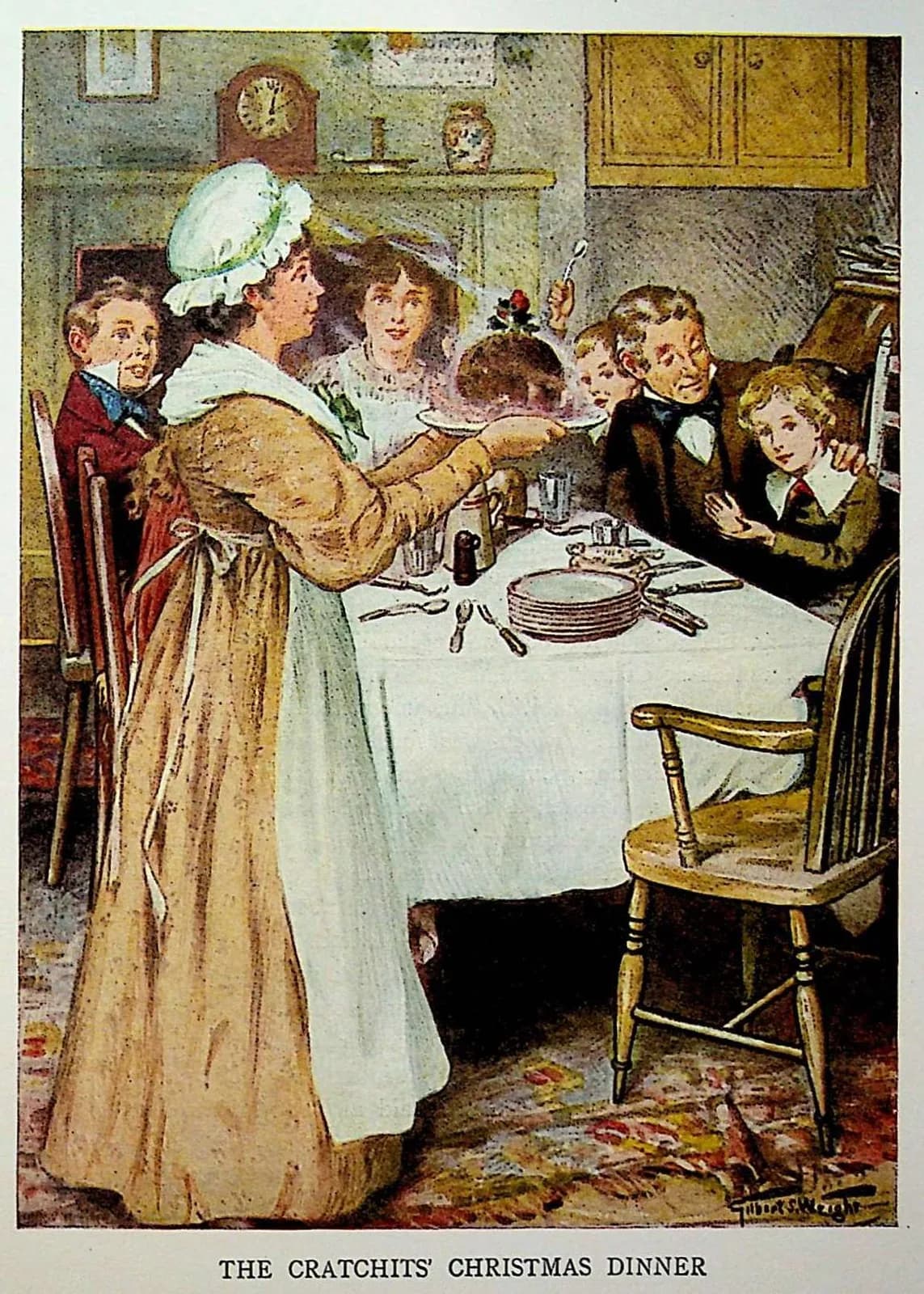
Five words travel from a crowded dinner table to the last sentence of the book, and the distance between the two is the whole design.
September 13, 2026 · 8 min read
Six essays on the 1843 novella and the playable version of it: the five words a child says at a crowded table that Dickens then saves for his own last sentence, the bargain struck in front of a headstone with a spirit that will not answer, the question of whether the book ever calls its miser a villain, the real law he is quoting when two collectors come asking for money, which screen version keeps the most of the text, and a guide to all four ghosts including the one that never speaks.
Five words travel from a crowded dinner table to the last sentence of the book, and the distance between the two is the whole design.
September 13, 2026 · 8 min read
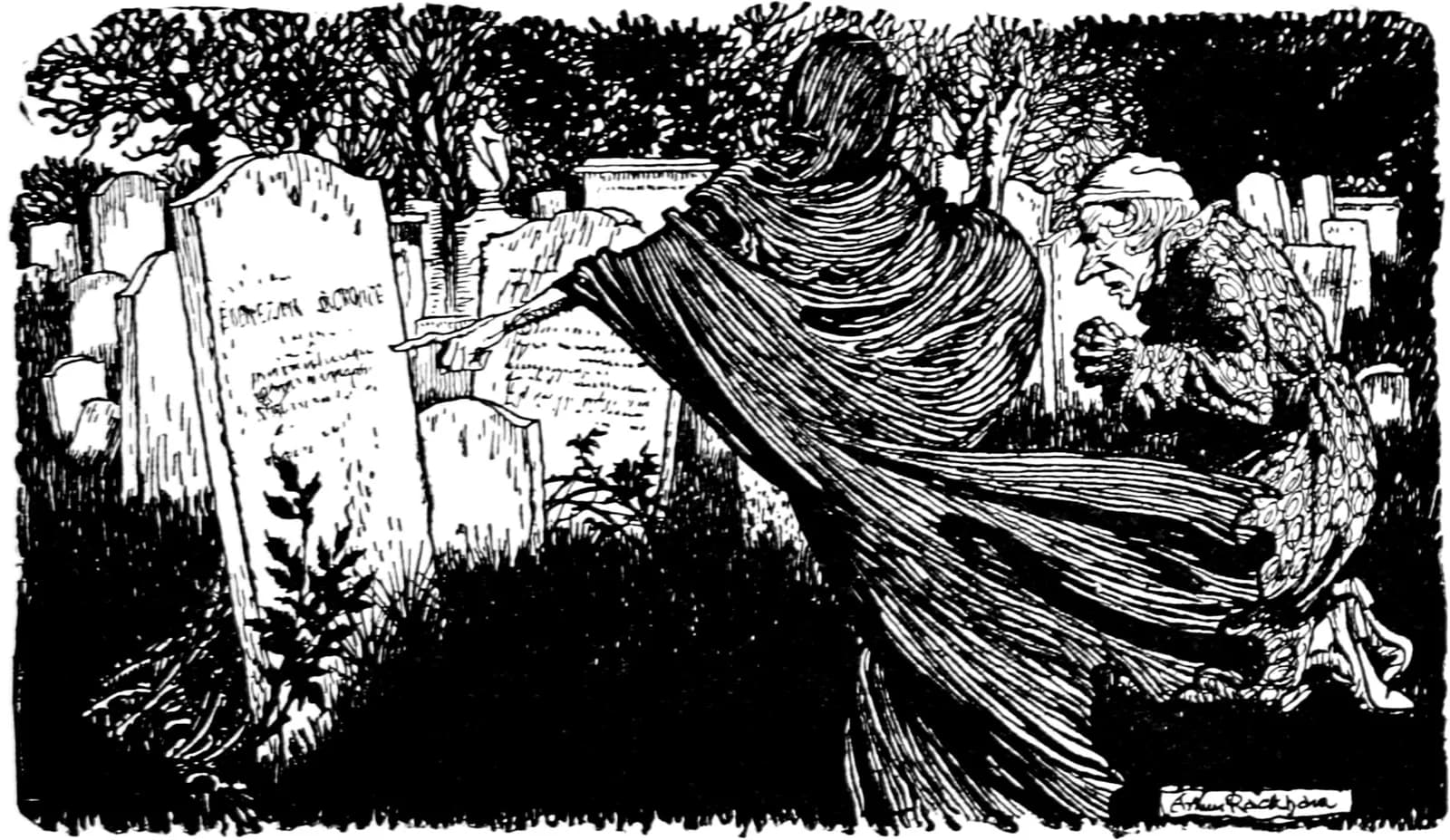
The famous change of heart opens as a negotiation with a figure that never answers, and the last stave exists to test whether the promise survives daylight.
September 13, 2026 · 9 min read
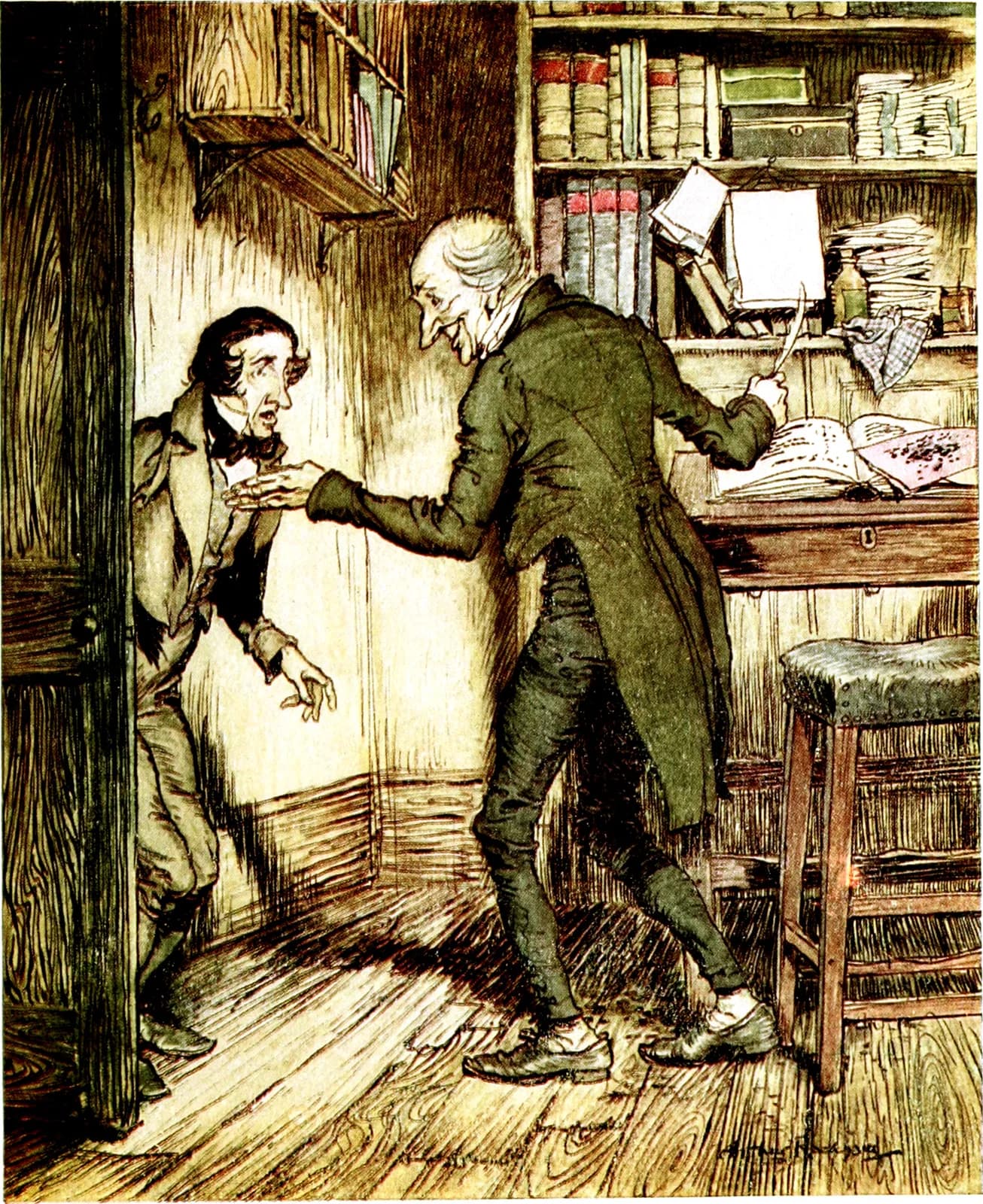
The book hands its cruellest description to a man and then hands its real accusation to two children standing under a spirit’s robe.
September 13, 2026 · 8 min read
Fidelity is a testable claim rather than a matter of taste, and the two versions that pass the test are a puppet comedy and a picture nobody reviewed kindly at the time.
September 13, 2026 · 9 min read
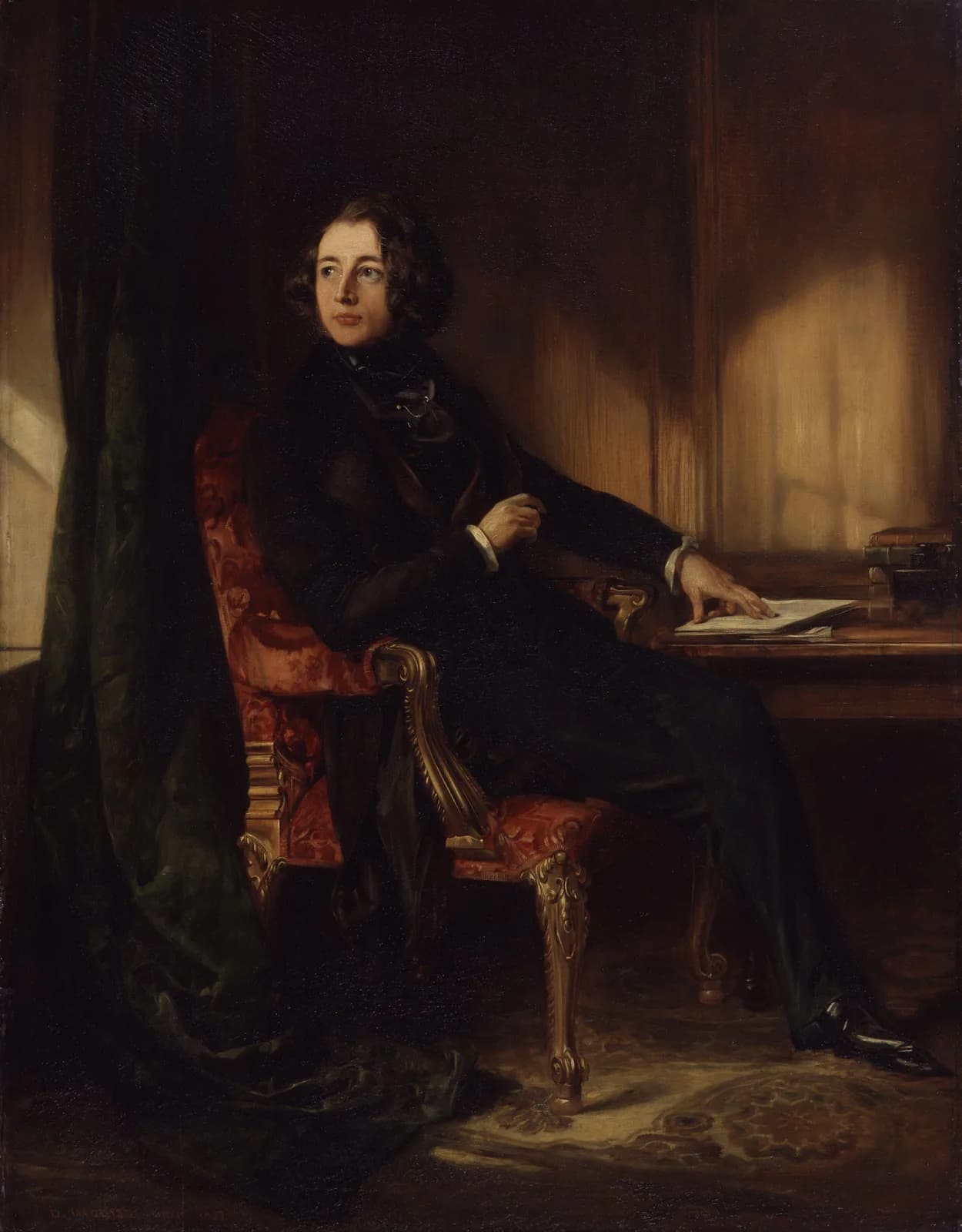
The question that opens the novel’s argument was the standing answer of English relief policy, and Dickens hands it to his miser word for word.
September 13, 2026 · 8 min read
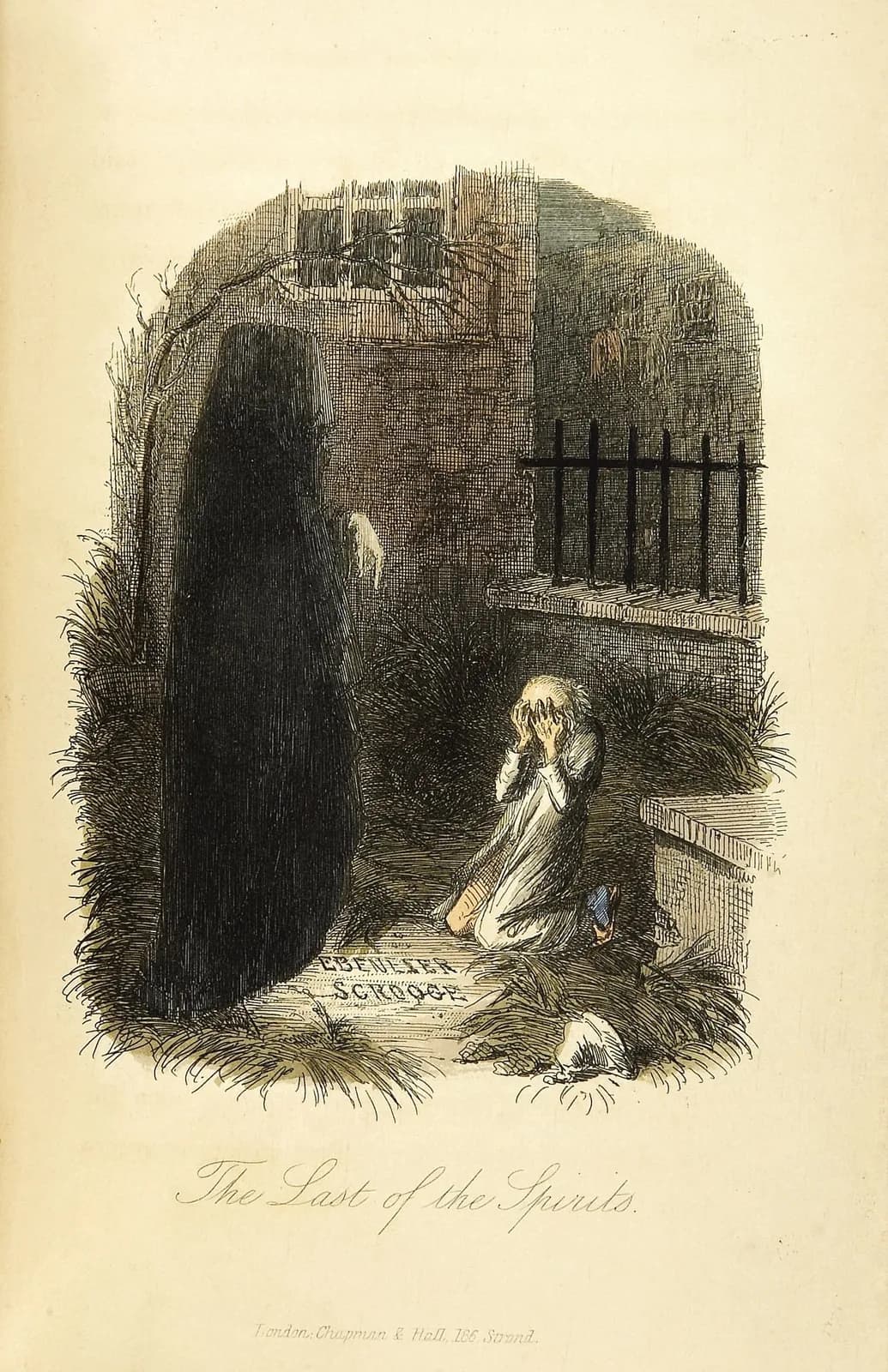
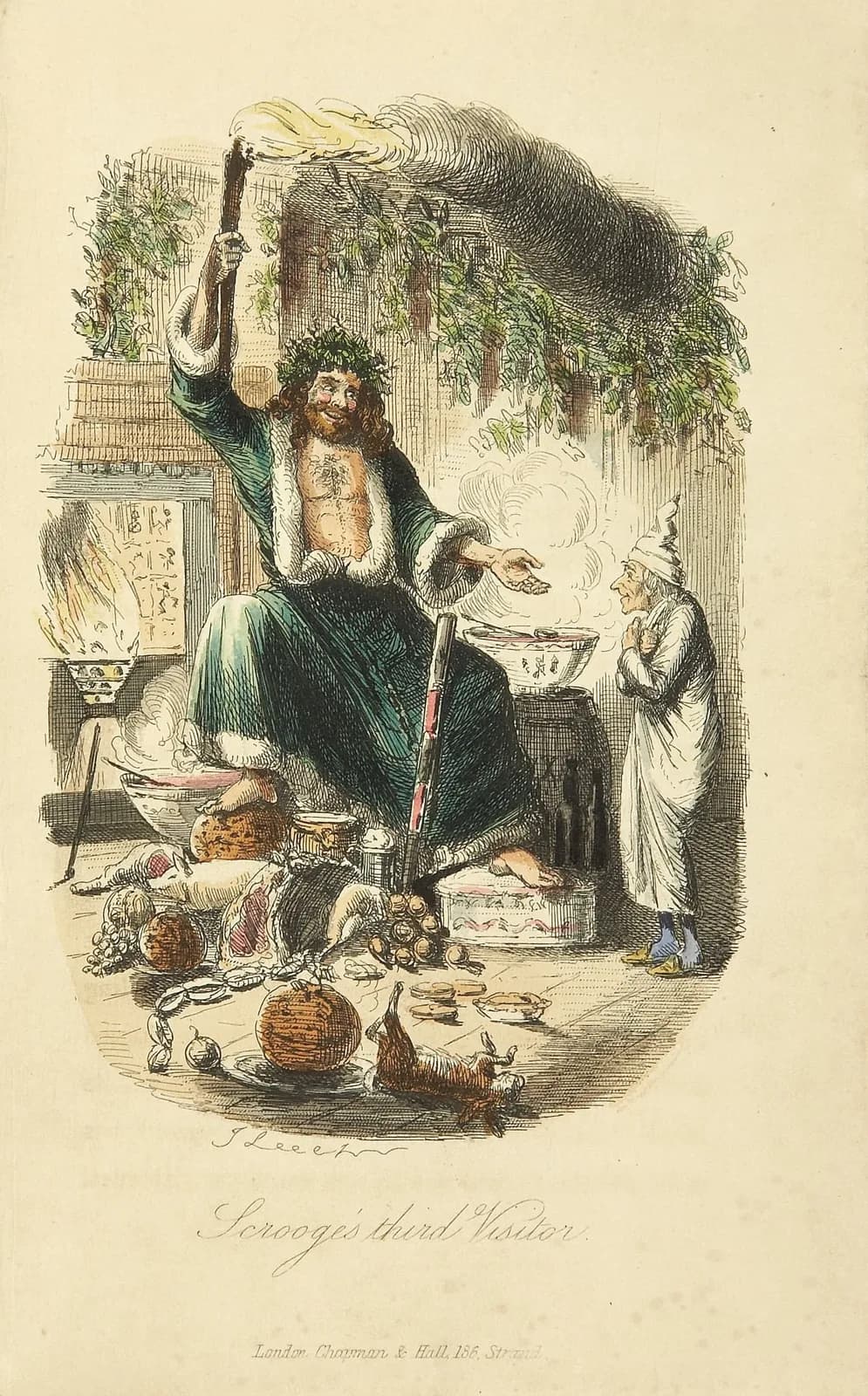
One of the four spirits in this book is given no dialogue at all, and the silence is doing more work than the skeleton hand ever does.
September 13, 2026 · 9 min read