Les Misérables Characters Guide: Who's Who, From Valjean to Gavroche
Most people arrive at Les Misérables already knowing four or five voices from a cast recording. The novel has a larger population than the stage can hold, and the people the songs skip are the ones who explain the shape of the book.


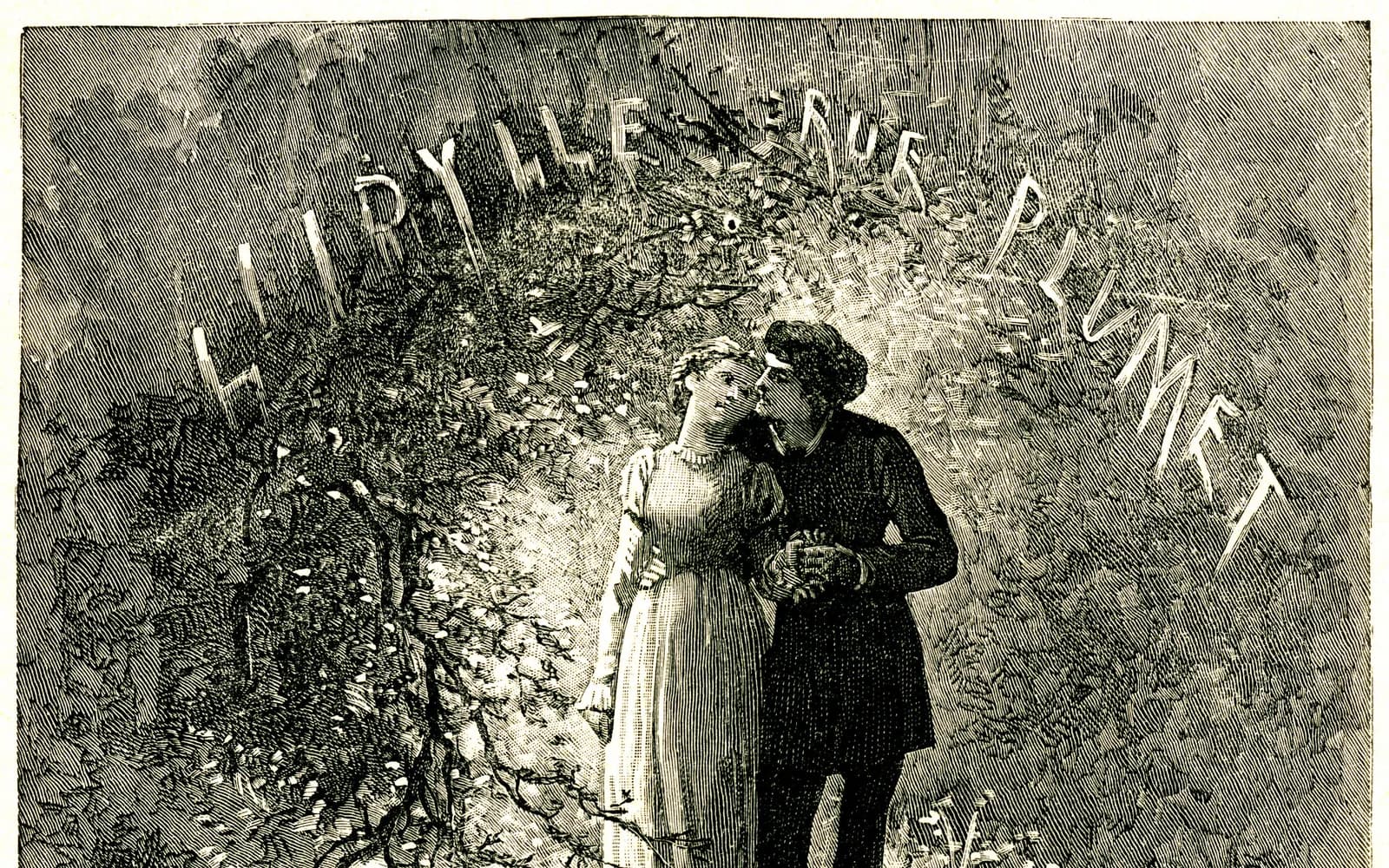
Most people arrive at Les Misérables already knowing four or five voices from a cast recording. The novel has a larger population than the stage can hold, and several of the people the songs skip are the ones who explain why the book is shaped the way it is.
This is a guide to who is who, grounded in the free Project Gutenberg text of the Isabel Hapgood translation rather than in a casting breakdown. Twenty-three of these scenes are doorways in the playable Les Misérables, which is a decent way to find out whose side you are actually on.
Spoilers throughout: this guide says who dies, who survives, and who gets away with it.
👤 The five the story turns on
- Jean Valjean is a tree-pruner who serves nineteen years for a theft and four escape attempts, is given silver by a bishop he robbed, and spends the rest of his life being somebody else on purpose. A separate essay does the arithmetic on that sentence, which is not the arithmetic most people carry.
- Javertis a police inspector born inside a prison to a convict’s wife, who chose the guard’s side of a line he believes is permanent. He is honest, incorruptible and never cruel for sport, and the case for and against calling him the villain is made in full elsewhere.
- Fantineis dismissed from a factory for having a child, and the novel then prices her destruction item by item. She sells her hair. Later she sells two front teeth and sends the forty francs to Montfermeil, and Hugo notes in the next sentence that the demand was a Thénardier invention and the money was never needed.
- Cosette is handed to innkeepers before she is five and works as their servant. The neighbourhood calls her the Lark because she is out in the street before daybreak, and Hugo closes that paragraph with six words: only the little lark never sang.
- Marius Pontmercy is a law student who discovers his dead father was a Napoleonic officer, breaks with the royalist grandfather who raised him, and falls into poverty and then into the student republican circle. He marries Cosette on the night of the sixteenth of February, 1833.
Two of those five never meet again after Volume I. Fantine dies in a book called “A Counter-Blow” having extracted a single promise about her daughter, and every remaining volume is that promise being kept by a man she barely knew.
💌 Éponine, and the triangle that mostly is not one
A love triangle needs three people who know about it. In the novel Marius never learns that Éponine loves him until she is dying, Cosette never learns it at all, and Éponine never says it to anyone while there is time to act on it. What the book has is one person carrying something alone for several hundred pages.
She is the Thénardiers’ eldest daughter, raised in the inn where Cosette was the servant, and grown up into Paris poverty. She finds Cosette’s address for Marius knowing exactly what she is handing him. At the barricade she comes back dressed as a boy, and when a soldier takes aim at Marius she puts her hand over the muzzle of the gun.
“And yet, when I saw them taking aim at you, I put my hand on the muzzle of the gun. How queer it is! But it was because I wanted to die before you.”
The bullet went through her hand and out through her back, and she tells Marius it is useless to remove her from the spot. She admits in the same breath that she was the one who led him to the barricade, and that she counted on him dying there. She has been carrying a letter from Cosette in her pocket the whole time, and she gives it to him at the end rather than at the start. She asks him to promise a kiss on her forehead once she is dead, because she thinks she will feel it. Then she says the sentence the scene is famous for, and it is more awkward and more human than the paraphrase people remember.
“And by the way, Monsieur Marius, I believe that I was a little bit in love with you.”
She tries to smile once more and dies, and Marius keeps the promise and puts the kiss on her forehead. The stage version gives her a solo and a rain-soaked duet, and both are good; what they cannot carry is that “and by the way,” which is a person apologising for the inconvenience of her own feelings in the last sentence she has.
🍷 Thénardier, who wins
The innkeeper is played for comedy on stage and he is genuinely funny on the page, and he is also the closest thing the novel has to a working model of evil. He runs the inn at Montfermeil as a mechanism for extracting money from an absent mother. He moves to Paris under the name Jondrette, joins a criminal gang, and stages an ambush that fills a twenty-two-chapter book of Volume III.
He also has children he does not keep. His eldest daughter is Éponine. His son grows up on the street under a different name entirely, and Hugo explains the nickname in a single flat aside: probably because his father’s name was Jondrette. Then he adds that it seems to be the instinct of certain wretched families to break the thread.
Nothing happens to him. He is not arrested at the end, not exposed, not punished. Marius, who owes him a debt he does not want, pays him off to make him go away, and Thénardier takes the money to America and sets up as a slave-dealer. That is his last appearance in the novel: a man who converted every relationship he had into cash, doing it one more time at a larger scale, entirely unmolested.
🚩 The barricade, name by name
The students are not a chorus. Hugo names nine of them and gives each a temperament in Volume III: Enjolras, Combeferre, Jean Prouvaire, Feuilly, Courfeyrac, Bahorel, Lesgle or Laigle, Joly and Grantaire. They call themselves the Friends of the A B C, which is a pun on abaissé, the abased. If you are unclear which uprising they are actually fighting in, that correction has its own section elsewhere and it is not the one most people assume.
- Enjolras leads, and Hugo describes him as a charming young man capable of being terrible. He dies standing against a wall, pierced by eight bullets, still upright.
- Grantaire is the drunk who believes in nothing except Enjolras. He sleeps through the entire battle, wakes into the last minute of it, crosses the room to stand beside Enjolras and asks to be shot with him. Enjolras presses his hand and smiles.
- Gavroche, the Thénardiers’ own son, thrown out and living rough, goes out in front of the barricade to collect cartridges from dead soldiers, singing, and is shot doing it. Combeferre brings the basket back. They lay him on a table beside old Mabeuf, the churchwarden who died earlier the same day.
- Combeferre, Courfeyrac, Feuilly, Joly, Laigle, Bahorel and Jean Prouvaire each get a paragraph of characterisation before the fighting and very little afterwards, which is Hugo making a point about how quickly a named person becomes a casualty figure.
That is the cast the songs are drawn from, and the gap between the two lists is the argument for reading the book. The complete text is free at Project Gutenberg if you want to meet the other half properly.
Sources
- Les Misérables (Isabel Hapgood translation, Project Gutenberg #135) — Project Gutenberg
Frequently asked questions
- Was Éponine in love with Marius?
- Yes, one-sided, and she only says so as she dies. She has a younger sister, Azelma, who survives the novel and sails for America with their father. The Thénardiers had five children in all, two of them handed off to a stranger for money, and Hugo kills two more at that barricade. Marius never knows any of it until she is dying.
- What does Éponine represent in Les Misérables?
- The cost of the childhood Cosette escaped. The two girls swap positions inside an inn whose sign Hugo prints as the “Sergeant of Waterloo”: Éponine is the petted daughter there, Cosette the servant, and once the family collapses in Paris she becomes what Cosette would have been. She is what happens to a child nobody's bishop ever reaches.
- Is Thénardier just comic relief, or a real villain?
- Both, and the comedy is the delivery system. In Paris he works with a four-man gang the novel calls Patron-Minette and runs his ambush out of a tenement called the Gorbeau hovel. Hugo keeps him funny precisely so that the reader stays in the room while he does the worst things in the book.
- Who is Enjolras in Les Misérables?
- The leader of the student republicans and the coldest figure in the novel; Hugo calls him a marble lover of liberty and gives him no romance at all, which is unusual in a book this size. His barricade was not even the famous one that week — Hugo says it was eclipsed by the barricade at Saint-Merry — yet he is the last man standing in the wine-shop and the only one the soldiers hesitate to shoot.
- Did Valjean love Cosette romantically?
- No. The relationship is paternal and the novel is explicit about its origin: a dying woman makes him promise to fetch her daughter, and Hugo titles the book that covers the rescue “Accomplishment of the Promise Made to the Dead Woman.” The misreading comes from adaptations compressing a decade of guardianship into a handful of duets.
Enjoyed this one?