Was Song Jiang the Worst Leader in Chinese Literature? The Amnesty Ending, Explained
The most divisive leader in Chinese fiction is not a tyrant or a fool. He is a clerk who wants his brothers to be respectable, and the price of that is most of them.


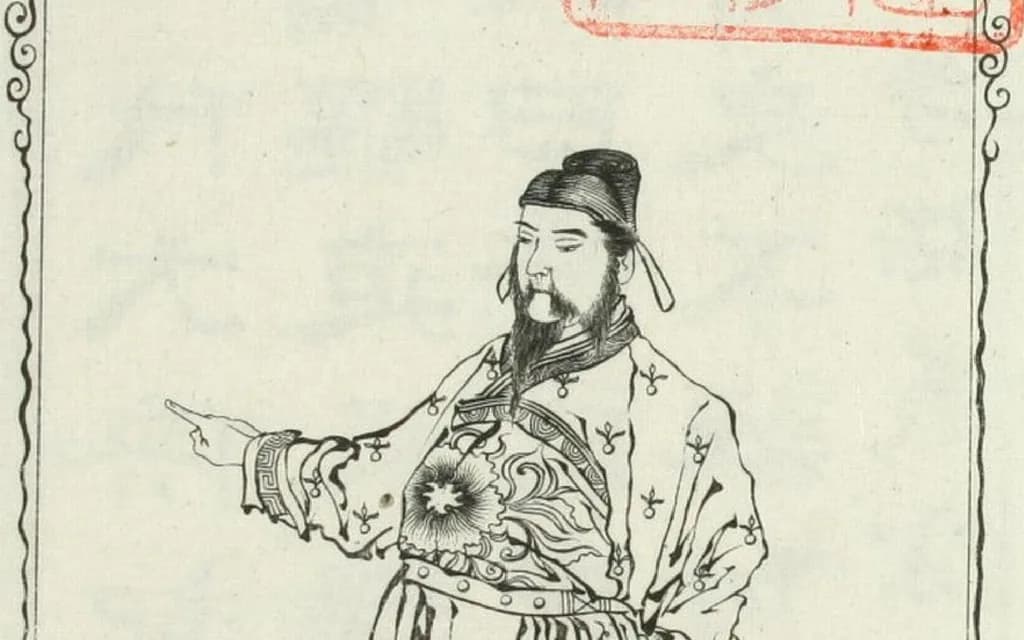
Nobody in Chinese fiction has been argued about for longer. Song Jiang is the man who gathers a hundred and eight outlaws into the only honest institution in a rotten empire, and then spends the second half of the book handing them back to the government that made them outlaws. Chinese readers have been calling him a traitor since at least the seventeenth century, and in 1975 the argument was serious enough to become a national political campaign.
- He is a clerk, not a warrior. His authority comes from generosity and reputation, and the book is clear that this is the only kind that lasts.
- The pardon is not a betrayal he stumbles into. He announces it as his goal, out loud, for forty chapters before it happens.
- Twenty-seven of the hundred and eight are alive at the end. The emperor does the arithmetic himself.
- The wine that kills him is a gift. And the last thing he does with his authority is use it on his most loyal follower.
Whether that makes him the worst leader in Chinese literature depends on a question the book keeps open. If you would rather stand in the hall on the day the hundred and eight are ranked than read about it afterwards, the playable Water Margin ends exactly there, one scene before everything below.
⚖️ The short answer, and the fairer one
The short answer is that he trades his brothers' freedom for a pardon and most of them die for it. That is what happens, and readers who call him the worst leader in the book are describing the outcome accurately.
The fairer answer is that he is the only man on the mountain with a political programme, and the tragedy is that the programme is coherent. Song Jiang does not think Liangshan is a country. He thinks it is a holding pattern: a hundred and eight competent men parked outside the system until the system is willing to use them properly. His banner does not say "down with the Song"; it says the outlaws act on heaven's behalf, which is a claim to legitimacy rather than a rejection of it. Every recruitment speech he makes is a version of the same offer, and the text repeats it so often that it stops sounding like a slogan and starts sounding like a man persuading himself.
Song Jiang shelters in the marsh for now, waiting only for the court's pardon, to serve the state with everything he has.
He is also not clean, and the book does not let him be. He becomes a fugitive in chapter 20 by killing his mistress in a rage over a letter she was blackmailing him with, an episode that belongs to a longer argument about how this novel treats women. So the man who spends four hundred pages insisting on his loyalty to the throne arrived at the mountain as a murderer. The novel puts those two facts side by side and declines to resolve them.
📕 Where your edition stops
This matters before anything else, and it is the reason two readers can finish this novel with opposite impressions of it. The seventy-chapter edition, which is the free Chinese text, the one most first-time readers meet and the one the playable version follows, ends at the assembly of the hundred and eight. There is no pardon in it, no campaign, and nobody dies at the end.
Everything in the rest of this piece comes from the longer hundred-and-twenty-chapter text, and we checked it there rather than taking it from summaries. What the short edition does have is the argument. The word for the pardon appears fifteen times in it, always in Song Jiang's mouth, always as an aspiration. Readers of the seventy-chapter version watch him campaign for a thing that never arrives, which is a genuinely different book from the one where it arrives and ruins everybody.
And the seventeenth-century critic who cut the novel there did not simply stop. He gave it an ending. After the roster is read and the oath sworn, the second-in-command falls asleep and dreams that a bowman has come to arrest the lot of them. In the dream the others are dragged in weeping, having offered to surrender to save him, and the judge refuses the offer with the one line that the entire second half of the long edition exists to disprove: if I pardon you today, how am I to govern the empire tomorrow? Then two hundred and sixteen executioners come out from behind the curtains, two to each man, and behead all hundred and eight beneath a plaque reading "Peace under Heaven". That is where the short edition leaves you.
| Edition | How it ends |
|---|---|
| 71 chapters (the free text, and the playable version) | The hundred and eight are ranked, the banner goes up, they swear to die on the same day, and the second-in-command dreams that they are all executed. Triumph with a knife under it. |
| 100 and 120 chapters | The pardon arrives, the outlaws become the emperor's army, and the book spends forty chapters killing them off in campaigns against people very like themselves. |
📜 What happens after the pardon
The pardon comes in chapter 82 of the long edition, and the novel stages it as a triumph. The emperor writes the edict in his own hand, and the marshal who carries it to the marsh brings thirty-six gold medals and seventy-two silver ones, thirty-six bolts of red brocade and seventy-two of green, and a hundred and eight bottles of imperial wine, one for every man.
The numbers are the prologue's numbers, the thirty-six heavenly spirits and the seventy-two earthly fiends, handed back as court honours. It is dated to the second month of the fourth year of Xuanhe, and it is the second attempt: an earlier delegation had already failed. The emperor's own defence of them, delivered while dressing down the minister who lost two armies trying to destroy Liangshan, is the sentence the whole amnesty rests on: this Song Jiang band does not raid the prefectures and does not plunder honest people; they are waiting only for a pardon. Which is exactly what Song Jiang has been saying for forty chapters, to anyone who would listen, and it is true.
Then the campaigns. Against the Liao invaders they are magnificent and, by Song Jiang's own later account, they come home without losing a single man. The long edition adds two more rebel campaigns, against Tian Hu and Wang Qing, which are the padding most readers skip. And then Fang La, another peasant rebel with his own mountain and his own reasons, and this is where the book stops being a story about outlaws and becomes an accounting exercise. By the siege of the last cave, Song Jiang looks at his own line and sees two-thirds of his brothers gone.
What kills them is not the enemy's strength; it is attrition and geography and disease, and the deaths are almost all offhand. The tattooed monk hears the tidal bore on the river at Hangzhou, mistakes it for war drums, then understands what it means, sits down in the temple and dies. Wu Song loses an arm, refuses the emperor's honours, and stays on at the same temple as a monk. Lin Chong is paralysed on the road home and left there with him. Three of them die of illness in the space of a single paragraph while the army is packing to leave.
Thirty-six officers march back from Hangzhou, and the count keeps falling on the road: two die of illness before the army has finished packing, one is left paralysed in a temple, and others simply walk away rather than go to court. By the time they kneel, the emperor does the arithmetic out loud: of the hundred and eight, twenty-seven are still alive, and four of those resign on the spot. Eight in ten are gone. He hands out posthumous titles, which is what a state does when it has nothing else to give.
🍶 How Song Jiang dies, and who he takes with him
Four ministers arrange it: Cai Jing, Tong Guan, Gao Qiu and Yang Jian, the last two being the men whose grudges started half the individual tragedies in the book. Their reasoning in chapter 120 is small and entirely believable. These men are now enemies of ours with military commands and imperial favour, and we look ridiculous.
They take the second-in-command first, on the theory that it removes an arm. Mercury is put into a dish of imperial food served to him at court; it settles in his hips and marrow, he loses the use of his legs, and a few days later he falls off the prow of his own boat into the Huai River and drowns. The ministers then report the accident and suggest that Song Jiang might be unsettled by the news, and that a gift of imperial wine would reassure him. The emperor hesitates, and agrees. The wine has a slow poison in it.
Song Jiang works out what has happened within a day. What he does with the knowledge is the thing readers cannot forgive and cannot look away from. He sends for Li Kui, the most violent and most devoted man he has, who is stationed a short boat ride away, feeds him, waits until he is half drunk, and tells him afterwards that the cup he has just emptied was dosed too. The reason he gives has nothing to do with saving himself. Li Kui would go back to the hills the moment he heard, and that would destroy the name they had all sworn to.
Better the court fail me. My loyal heart will not fail the court.
Li Kui, who has spent the entire novel as the book's uncontrollable element, does not argue. He says he served his brother in life and in death he will just be one more little ghost under his command, and goes back to his boat to die. Song Jiang is buried outside the south gate of Chuzhou in a marsh he had picked out for himself months earlier, because the water and the hills reminded him of Liangshan.
The survivors do not prosper either. One of the fishermen brothers is stripped of his commission for having tried on the rebel leader's yellow robe as a joke after the victory, and goes home to the marshes to fish, where the text says he lived to sixty and this is presented, correctly, as one of the happier outcomes. The best cavalry commander they have falls off a horse drunk and dies of it. Another is killed years later fighting the Jin invasion that will shortly destroy the dynasty everyone in this book has just died for.
🚩 Why Mao banned the book he loved
The most famous modern reading of this ending is a political one, and it came from a man who had spent decades admiring the novel. In 1937, in one of his best-known essays, Mao Zedong used the outlaws' three assaults on Zhu Village as a model of how to study a real situation before acting on it. He is on record elsewhere as a lifelong reader of the book.
Then, on 14 August 1975, in a comment made at the request of a literature teacher at Peking University named Lu Di, he described the novel as useful chiefly as a negative example: it lets people see what capitulationists look like. Within hours the Gang of Four had launched a national Criticize Water Margin campaign. The country's most authoritative publications filled with articles denouncing Song Jiang as a renegade for surrendering to the emperor, and the target of that argument was not really a fourteenth-century character. The current official view in China, shared by most outside observers, is that the group deliberately exploited a few offhand remarks for a factional purpose.
What is striking, six centuries after the book was written, is that the campaign had to argue the case at all. The novel had already made it. Everything the 1975 articles said about Song Jiang, the long edition says first and says better: that a man can be personally decent, genuinely loved, politically sincere, and still walk a hundred and eight people into a machine that has no use for them beyond the war it needs them for. This was not the first time a Chinese government decided the book was dangerous, and the earlier attempts are part of a four-hundred-year pattern.
The seventy-chapter Chinese text is at Project Gutenberg, and the hundred-and-twenty-chapter chapters used above are at Chinese Wikisource, which is where every number and every death in this piece was checked. If you are still choosing an edition, start with the translation comparison, and for the man whose ruin makes the emperor's pardon hardest to swallow, see Lin Chong.
Sources
- 水滸傳, 第七十回 (Chinese text, 71-chapter recension) — Project Gutenberg
- 水滸傳 (120回本), 第八十二回 — 宋公明全夥受招安 — Chinese Wikisource
- 水滸傳 (120回本), 第一百十九回 — Chinese Wikisource
- 水滸傳 (120回本), 第一百二十回 — 宋公明神聚蓼兒洼 — Chinese Wikisource
- Water Margin — Wikipedia
Frequently asked questions
- Does Song Jiang die at the end of Water Margin?
- Yes, poisoned by a gift of imperial wine. The survivors scatter rather than prosper: Guan Sheng falls off a horse drunk and dies of it, Huyan Zhuo is killed years later fighting the Jin, and Ruan Xiaoqi is stripped of his commission for having tried on a rebel's yellow robe as a joke, goes home to the marshes and fishes until he is sixty.
- Why did Song Jiang accept amnesty from the government?
- Because he had wanted it from the beginning; the pardon is the goal, not the betrayal of one. When it comes, in chapter 82 of the long edition, it arrives as an edict in the emperor's own hand plus thirty-six gold medals, seventy-two silver ones, matching bolts of brocade, and a hundred and eight bottles of imperial wine — one for each of them.
- How many of the 108 heroes survive Water Margin?
- Twenty-seven, by the emperor's own count in chapter 119, and four of those resign on the spot. What makes it worse is how late the dying starts. Song Jiang says it himself: they broke the Liao and came back to the capital without losing a single man. It is the campaign against a fellow rebel, Fang La, that takes seven in ten of them.
- What did Mao Zedong say about Water Margin?
- On 14 August 1975 he called it useful as a negative example, to let people see what capitulationists look like, in a comment made at the request of a Peking University literature teacher named Lu Di. He had used the book admiringly before: in On Contradiction in 1937 he held up its three assaults on Zhu Village as a model of analysing a real situation.
- Does the playable Water Margin include the amnesty ending?
- No, and neither does the seventy-chapter edition it follows. Both stop at the same moment, with the hundred and eight ranked at the Hall of Loyalty and Righteousness; the last doorway in the game is called The Heroes of Liangshan Marsh Take Their Ranks. Everything in this piece past that point comes from the longer edition.
- What are the 108 Stars of the Water Margin?
- Thirty-six Heavenly Spirits and seventy-two Earthly Fiends, which is where the number comes from. The prologue has them sealed under a stone tablet by a Daoist patriarch and released by mistake; they are then born as the outlaws, and the same tablet resurfaces at the Hall of Loyalty and Righteousness to rank all hundred and eight by name.
- Why does Song Jiang poison Li Kui?
- To stop him avenging the poisoning of Song Jiang. Knowing he is dying, he calls Li Kui to Chuzhou and doses his cup, because Li Kui would go back to the hills and ruin the name they had all sworn to. Li Kui's answer is the bleakest line in the book: he served him in life, and in death he will just be one more little ghost under his command.
Enjoyed this one?