War of the Worlds Ending Explained: Humanity Didn't Win
The last chapters of Wells's novel turn on one cause that most readers remember and an epilogue that most readers skip. Wells is far less certain about that cause than his climax sounds.


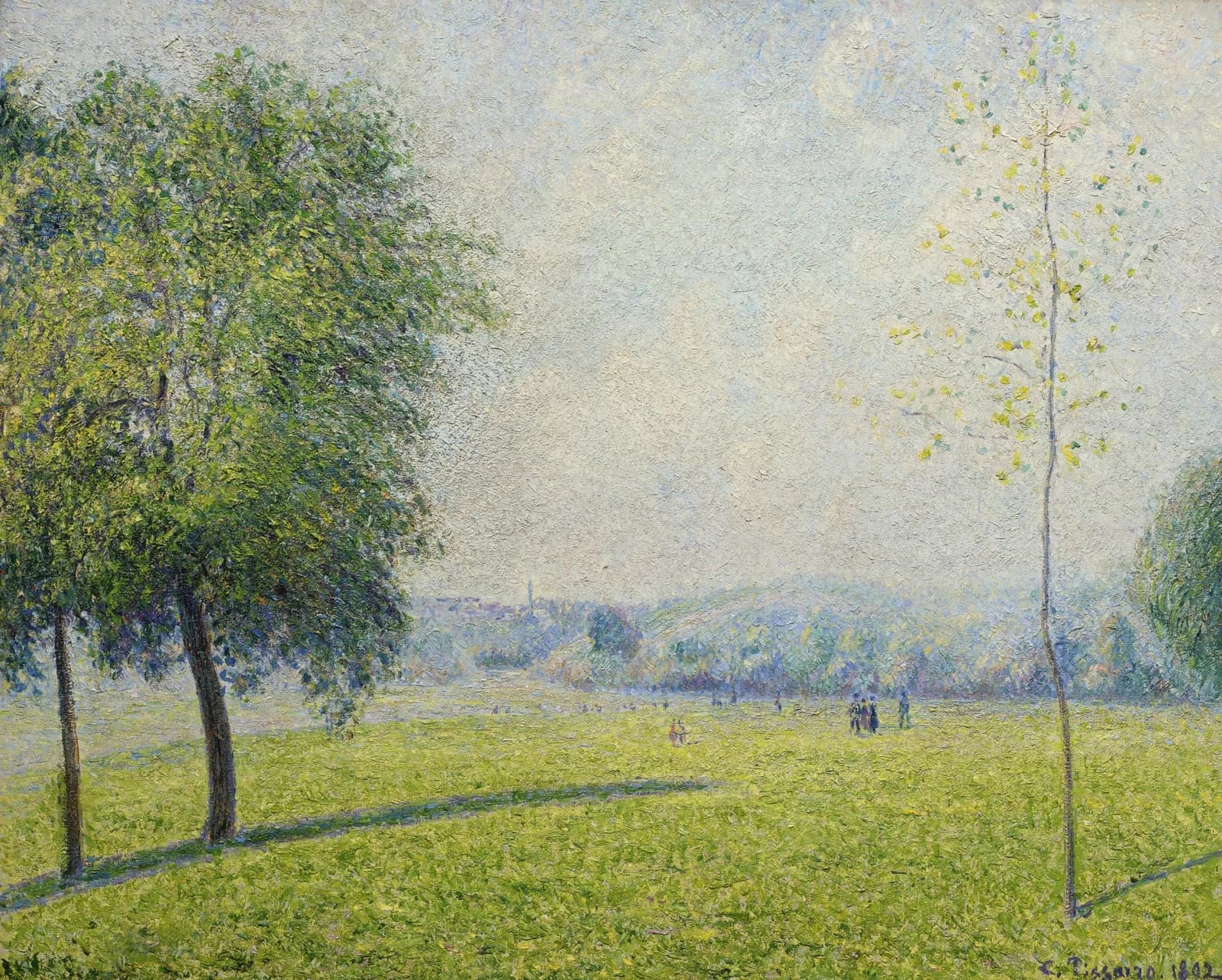
Spoilers for the whole of The War of the Worlds, including the last three chapters and what kills the Martians.
Human guns and one warship kill a few Martians earlier in the book, and none of it slows the invasion down. The last three chapters hand the planet back without a single human victory in them. The empty city on the day of the wailing is its own doorway in the playable War of the Worlds, where the invasion has gone quiet and you walk toward the noise to find out why.
🔊 What is the wailing, “Ulla, ulla”?
It is a dying Martian. The narrator first hears it near South Kensington, a sobbing alternation of two notes that rolls down the empty streets, and follows it across London to a fighting-machine standing still beyond Regent’s Park. He later guesses it was the last to die, its voice running on until the machinery gave out.
The chapter is called Dead London, and Wells earns the title on the walk. Black powder lies over the Fulham Road and about a dozen bodies. The red weed choking the bridges is already whitened in patches by disease. When the cry cuts off as he crosses the canal, the silence frightens him more than the noise did, and he runs and hides in a cabmen’s shelter until long after midnight.
It was as if that mighty desert of houses had found a voice for its fear and solitude.
🐦 What does the narrator find on Primrose Hill?
He finds the invasion already over. At dawn he walks toward the third machine meaning to be killed, sees birds circling its hood, and climbs the earth rampart of the Martians’ largest camp. Inside lie nearly fifty of them, some in overturned machines, a dozen laid out in a row, and dogs fighting over the bodies.
His first thought is biblical. For a moment he believes the destruction of Sennacherib’s army has been repeated, an angel killing the invaders in the night. Then he stands on the rim with the sun coming up, weeping and praising God, and remembers nothing of the next three days. Other wanderers had found the dead camp the night before, one of them had telegraphed the news to Paris, and church bells silent for a fortnight caught the news until all England was ringing.
🦠 What actually killed them?
Earthly bacteria. The narrator says the Martians were slain by the putrefactive and disease bacteria their systems had never met, because there are no bacteria on Mars. Every human has inherited resistance, bought by what he calls the toll of a billion deaths, and the invaders arrived with none of it.
slain, after all man’s devices had failed, by the humblest things that God, in his wisdom, has put upon this earth.
Readers often call this a cheat, a cure dropped from the sky in the last chapter, and the Wikipedia article on the novel puts deus ex machina in its See also list. Wells planted it two chapters earlier. Describing the red weed’s collapse, the narrator says it was seized by a cankering disease, believed to be bacterial, because every Earth plant had evolved a resistance the weed lacked. The weed dies first, in plain view, and the narrator himself says he and many others might have foreseen the rest. The novel’s first sentence already pictures humans as transient creatures in a drop of water under a Martian microscope, an image read line by line in the essay on the opening line.
🔬 How sure is Wells?
Less sure than the climax sounds. In the epilogue the narrator admits his physiology comes from a book or two, and that he assumed a man named Carver’s explanation, which seemed almost proven to him, while telling the story. The bodies examined after the war held no bacteria except known Earth species, which fits the theory, and he still ends the point by calling it by no means a proven conclusion.
The rest of the epilogue keeps that tone. The black smoke and the heat-ray are still not understood, there may be a second attack when Mars comes round again, and a man named Lessing has what the narrator calls excellent reasons to believe the Martians have already landed on Venus. The narrator allows that their defeat may be only a reprieve. The book that opened on human complacency closes by taking away the last of it.
The two best-known films keep the germs and even the wording. George Pal’s 1953 version closes on a narrator crediting “the littlest things which God, in His wisdom, had put upon this Earth,” and the narration over the end of Spielberg’s 2005 film lifts Wells’s own sentences from the Dead London chapter, from “By the toll of a billion deaths” to “neither do men live nor die in vain.” Both narrations state the cause flatly, without the epilogue’s doubt. Our adaptation comparison sets both films beside the 1938 radio broadcast and the other versions.
🏡 Does the narrator find his wife?
Yes, against everything he has been told. The family who nursed him say Leatherhead, where he left her, was wiped out with every soul in it. He walks back to his house in Woking anyway and finds his unfinished essay on the desk, its last sentence breaking off at “we may expect.” Then his cousin and his wife appear at the open window, as amazed and afraid as he is, and she gives a faint cry.
The novel’s very last sentence, at the end of the epilogue, returns to that moment: holding her hand again and knowing that each had counted the other among the dead. The pages just before it are about Primrose Hill as it is now, with children playing and sightseers walking around the machine that still stands there. The whole text is free from Project Gutenberg, and the epilogue reads in ten minutes.
Sources
- The War of the Worlds (Project Gutenberg text) — Project Gutenberg
- The War of the Worlds — Wikipedia
- Camille Pissarro — Wikipedia
- Camille Pissarro, Primrose Hill, Londres (1892) — Wikimedia Commons
- War of the Worlds (2005 film) — Wikipedia
Frequently asked questions
- What happened at the end of War of the Worlds book?
- The Martians died in their camps, killed by Earth bacteria their bodies had never met, and the narrator, who had given up his wife for dead, found her alive at their house in Woking. England began to put itself back together. The first newspaper to resume publication was the Daily Mail, most of it blank, and by the time the narrator writes his epilogue an almost complete Martian sits in spirits at the Natural History Museum for anyone to see.
- What ends up killing the aliens in War of the Worlds?
- Ordinary germs, in the narrator's account, the kind that cause disease and decay. The epilogue backs this with a habit of the Martians themselves: they never buried their dead, and they carried out reckless slaughter, which the narrator reads as "an entire ignorance of the putrefactive process" on a planet where nothing caused it.
- What does the ending of War of the Worlds mean?
- That Earth was never the safe, fenced-in home people assumed. The narrator says the invasion did humans some good: it robbed people of the serene confidence in the future that he calls the most fruitful source of decadence, and it promoted "the conception of the commonweal of mankind." He even imagines life from Earth reaching Venus one day, when the cooling sun makes this planet uninhabitable.
- Why did the tripods start dying?
- The machines stopped because the Martians inside them were dying. The narrator says they were doomed from the first day, when they began to eat and drink on Earth, and were "dying and rotting even as they went to and fro." He adds that death came not a day too soon, because they had been experimenting with a great flying-machine in Earth's denser air.
- Does the narrator find his wife at the end of War of the Worlds?
- Yes, at their own house in Woking. She arrives with his cousin, "white and tearless" as he puts it, says that she came and that she knew, and then sways so that he has to catch her in his arms. Wells never explains how she escaped Leatherhead, where her cousins lived, even though the narrator had been told the town was destroyed.
Enjoyed this one?